






What to Wear Under a Wetsuit Scuba Diving (Female Diver Guide)
The first time I pulled a poor fitting rental wetsuit on over a flimsy bikini, I was cold for the entire dive and I almost took my bikini off with my wetsuit. Nobody had told me not to. It seemed too obvious to ask.
Fifteen years later, after diving Indonesia, Mexico and the Red Sea, it's still the question I get most from female divers. From beginners on their fourth dive, and from instructors on their four hundredth.

What should you wear under a wetsuit? The short answer
Wear close-fitting swimwear made for the water: a scuba bikini, a rash guard, or a rash guard and leggings together. In cooler water, add a thermal base layer. Never wear cotton, never wear anything loose, and never wear anything with wires, moulded cups or bulky seams.
That's the whole answer. Everything below is why, and the detail that makes the difference on a long dive day.
| Water temp | Wetsuit | What goes underneath |
|---|---|---|
| 29–31°C / 84–89°F | None, or 3mm | Scuba bikini, or rash guard and leggings as a dive skin |
| 26–29°C / 79–84°F | 3mm - 5mm | Scuba bikini, plus a rash guard if you run cold |
| 24–26°C / 75–79°F | 5mm | Full-length rash guard and leggings |
| Below 24°C / 75°F | 5 to 7mm | Thermal rash guard and leggings as a base layer |
Temperature tolerance is personal. I know divers happy in a shorty at 27°C and divers who want 5mm. Treat this as a starting point, then adjust to yourself.
Do you wear underwear or a swimsuit under a wetsuit?
Wear swimwear, not underwear. This is the question I get asked more than any other, usually quietly, usually by someone who assumes it's a silly thing to ask. It isn't.
Regular underwear is cotton, and cotton is the single worst thing you can put under neoprene. It holds water, it stays cold, it never dries between dives, and it bunches under compression. Everything you don't want, in one garment.
Swimwear designed for the water does the opposite. It sheds water, dries on the boat, and holds its shape when a wetsuit presses on it.
Can you dive with nothing underneath? You can. In your own suit, that's your call. In a rental I'd rather you didn't. A base layer is more hygienic, and neoprene against bare skin over a full day chafes at the neck and under the arms.
If you want the coverage underwear gives you, a high-waisted bikini bottom does the same job and behaves properly wet.
Are wetsuits meant to be tight? And what about what's underneath?
Yes, snug, both of them. This is the part that catches people out, because it's the opposite of what feels right in a shop.
A wetsuit works by trapping a thin layer of water against your skin, which your body then warms. A loose suit flushes cold water through and never warms up at all. So it should sit close everywhere, without restricting your breathing or your shoulder movement.
And what's underneath needs to be close for a different reason. Neoprene compresses everything beneath it. Spare fabric has nowhere to go, so it gathers into a fold, and that fold sits under a compressed suit for forty minutes. You'll feel it across the shoulder or the small of your back, and there is nothing you can do about it at 18 metres.
The one sizing rule worth remembering: under a wetsuit, size true to your measurements. Not up.
On its own, a lot of dive swimwear is more comfortable with a little room, and most of our size guides say exactly that. But under neoprene, all of that advice collapses into one rule. Size true.
"Pretty print! I think these will fit well under a wet suit. Take your time to really measure yourselves before ordering!"Tingting, Turquoise Seas Scuba Bikini Set
Tingting's right, and it matters more with us than with most brands. Everything is made to order, cut in your size after you buy it. Every size guide has a size finder, so put your measurements in and it gives you an answer.
What's the best bikini or swimsuit to wear under a wetsuit?
The best one is the one with nothing rigid in it.
What to avoid: underwire, moulded cups, chunky clasps, metal rings, thick knots. Anything rigid becomes a pressure point the moment the suit compresses, and a pressure point you can't reach is a long forty minutes.
What to look for: flat seams, secure straps that don't slip, fabric with proper recovery, and a cut that stays put when you bend to clip a fin.
Scuba bikini: the warm-water default
In the tropics this is what most divers wear and what I wear most of the time. Minimal bulk, nothing to bunch, and you can change between dives without a performance on the back deck.
"Fits under my wetsuit"May C., Fire Corals Scuba Bikini Set
"This bikini fits sooooo well! I thought being a 'top-heavy' lady that i might struggle with a top without wires, but this is so supportive, with still looking feminine and cute. The bottoms are high waisted but doesn't have that butt part that makes you look like it's a diaper!"Laura, Whimsical Whale Shark Scuba Bikini Set
High-waisted or cheeky? High-waisted, if a wetsuit is going over it. More coverage means less edge to roll, and the waistband sits above where the suit creases when you bend.
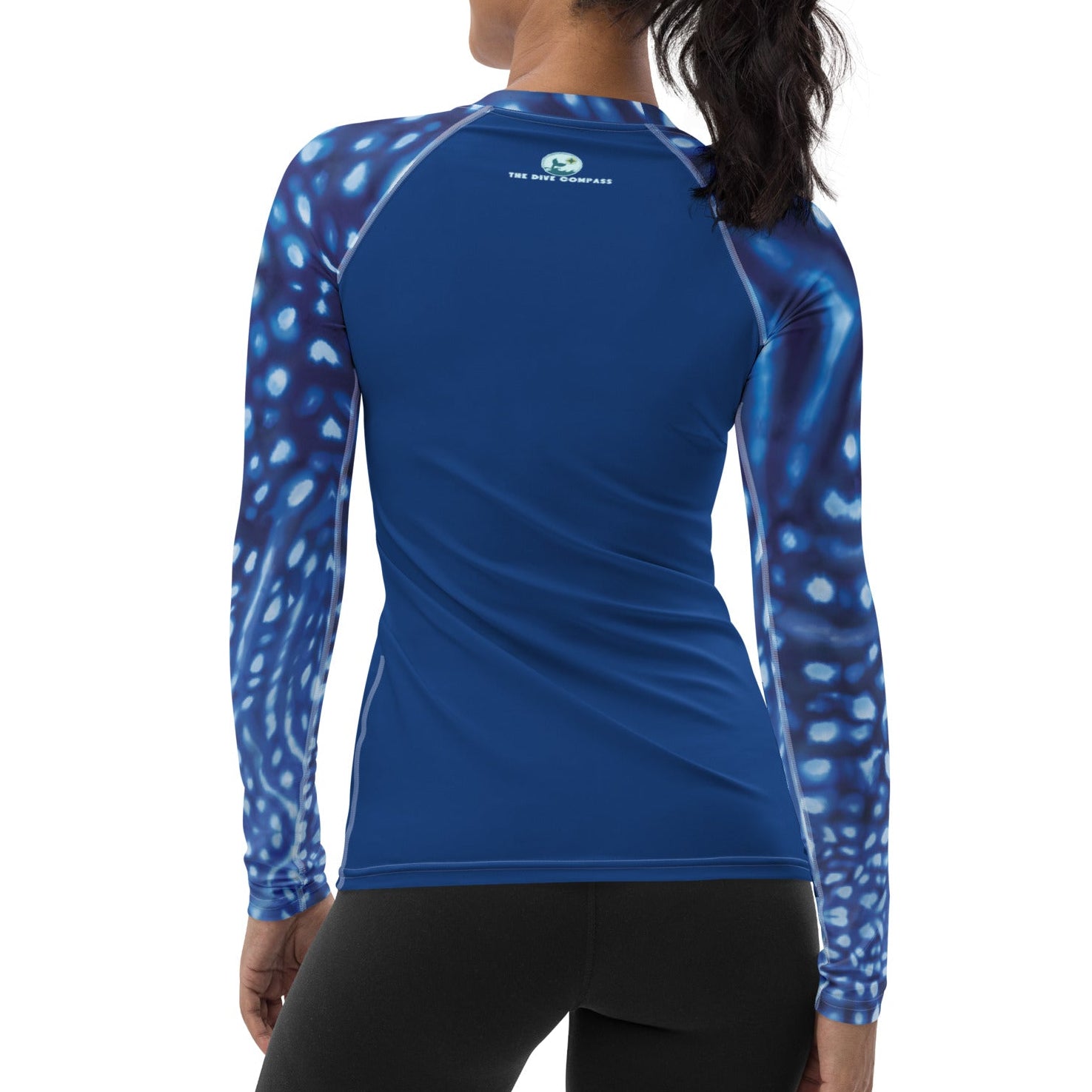
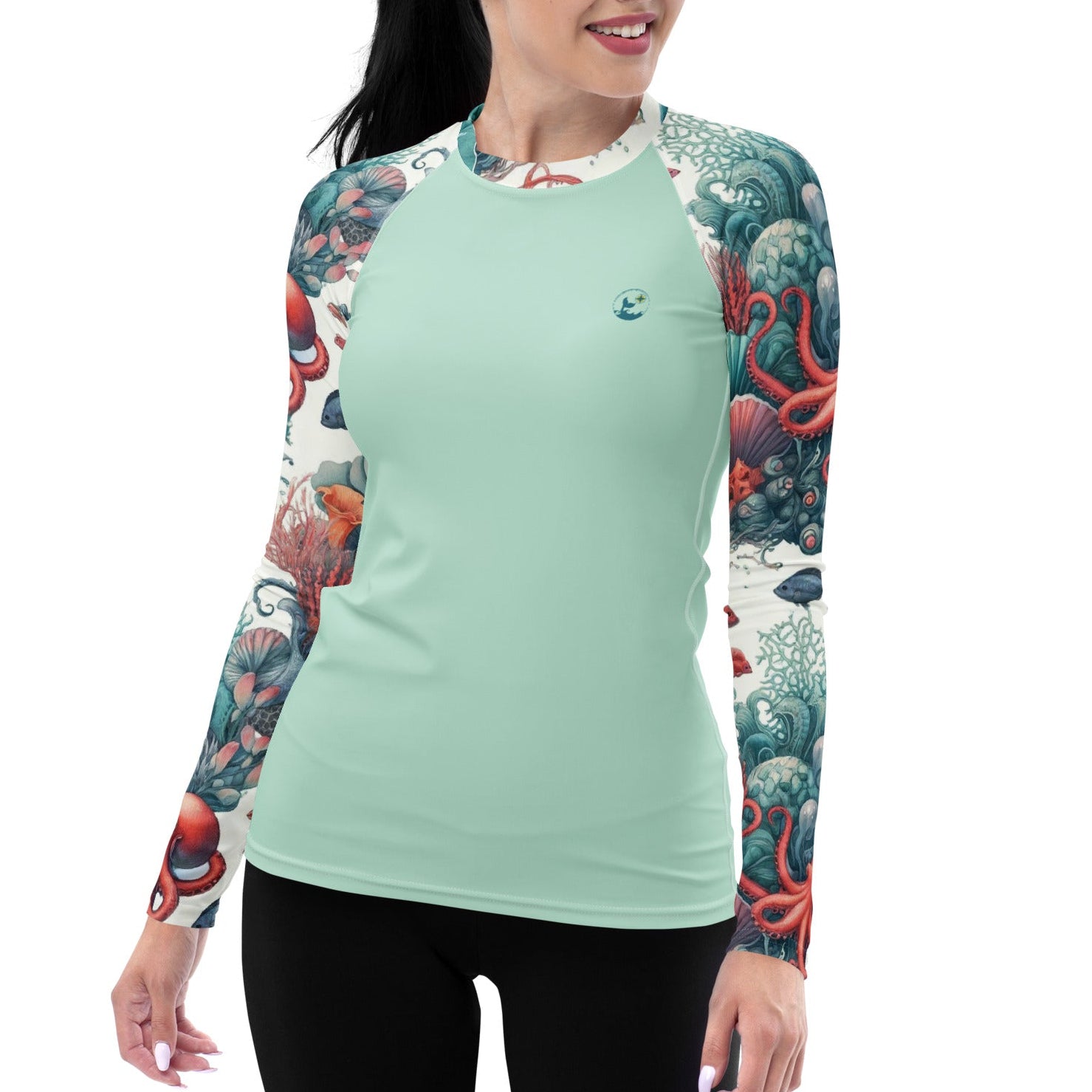
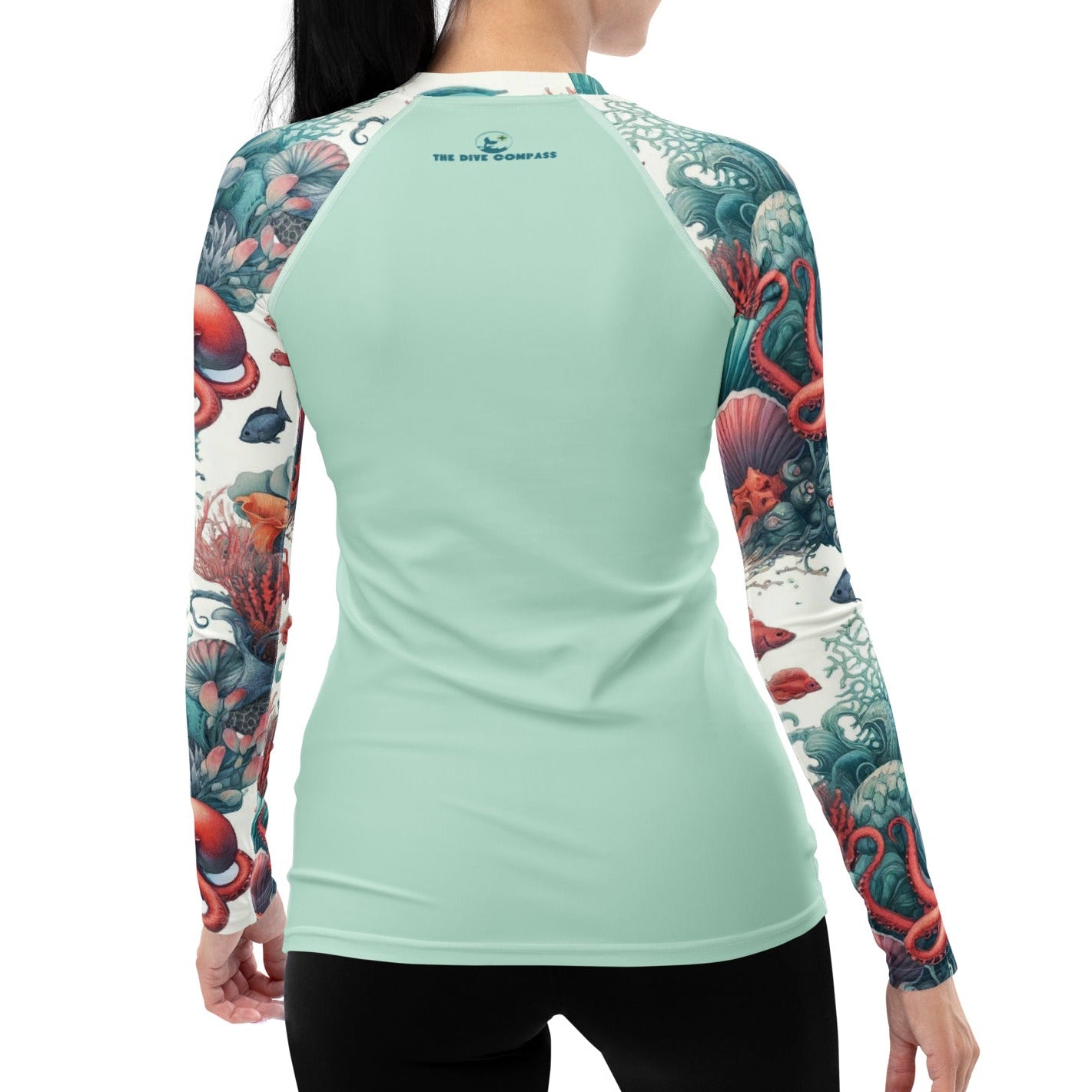
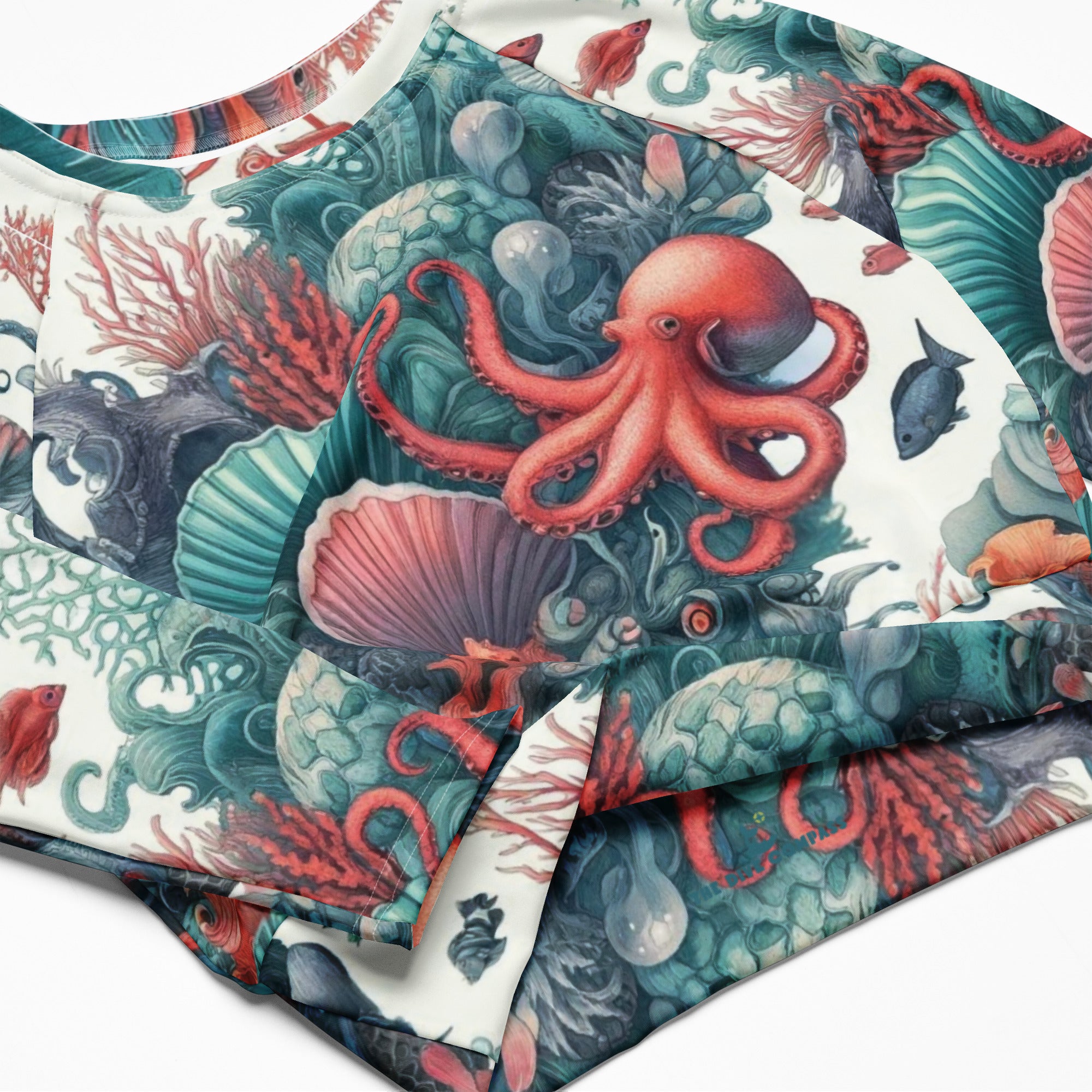
Full-length rash guard: the one that earns its place

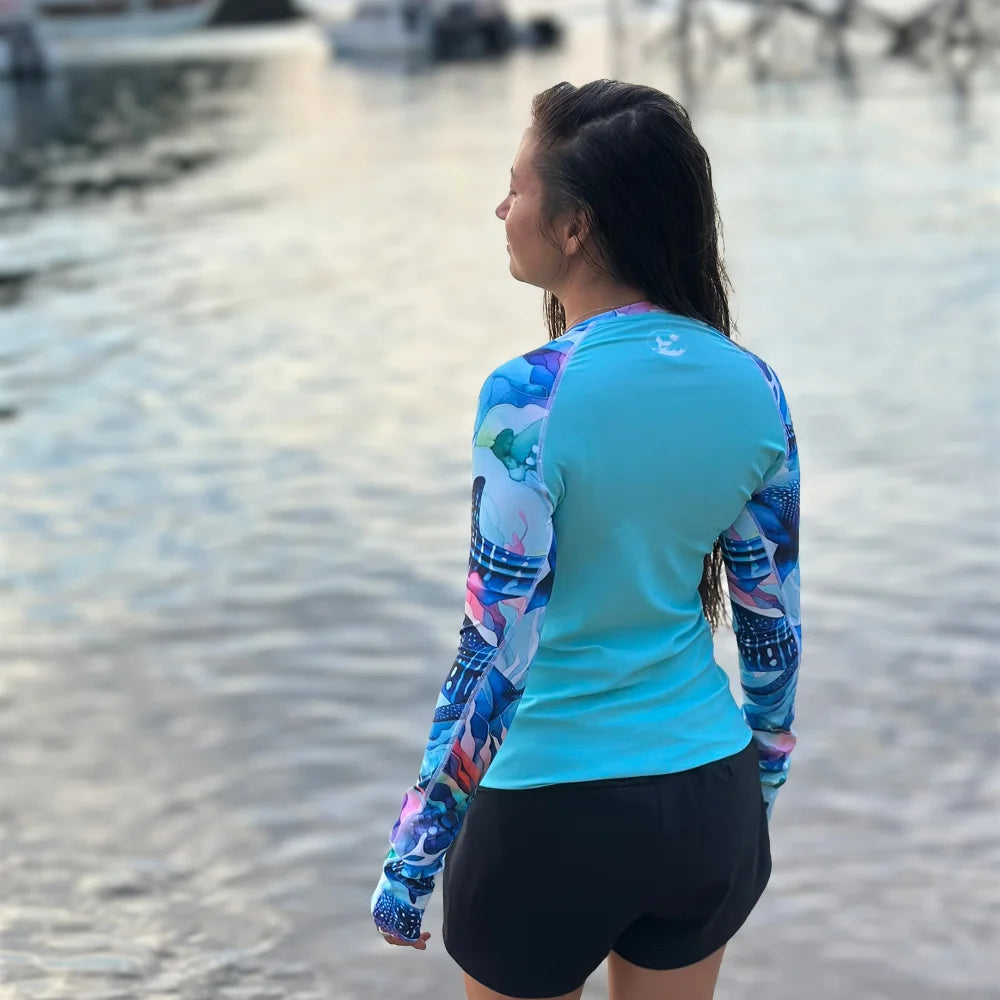
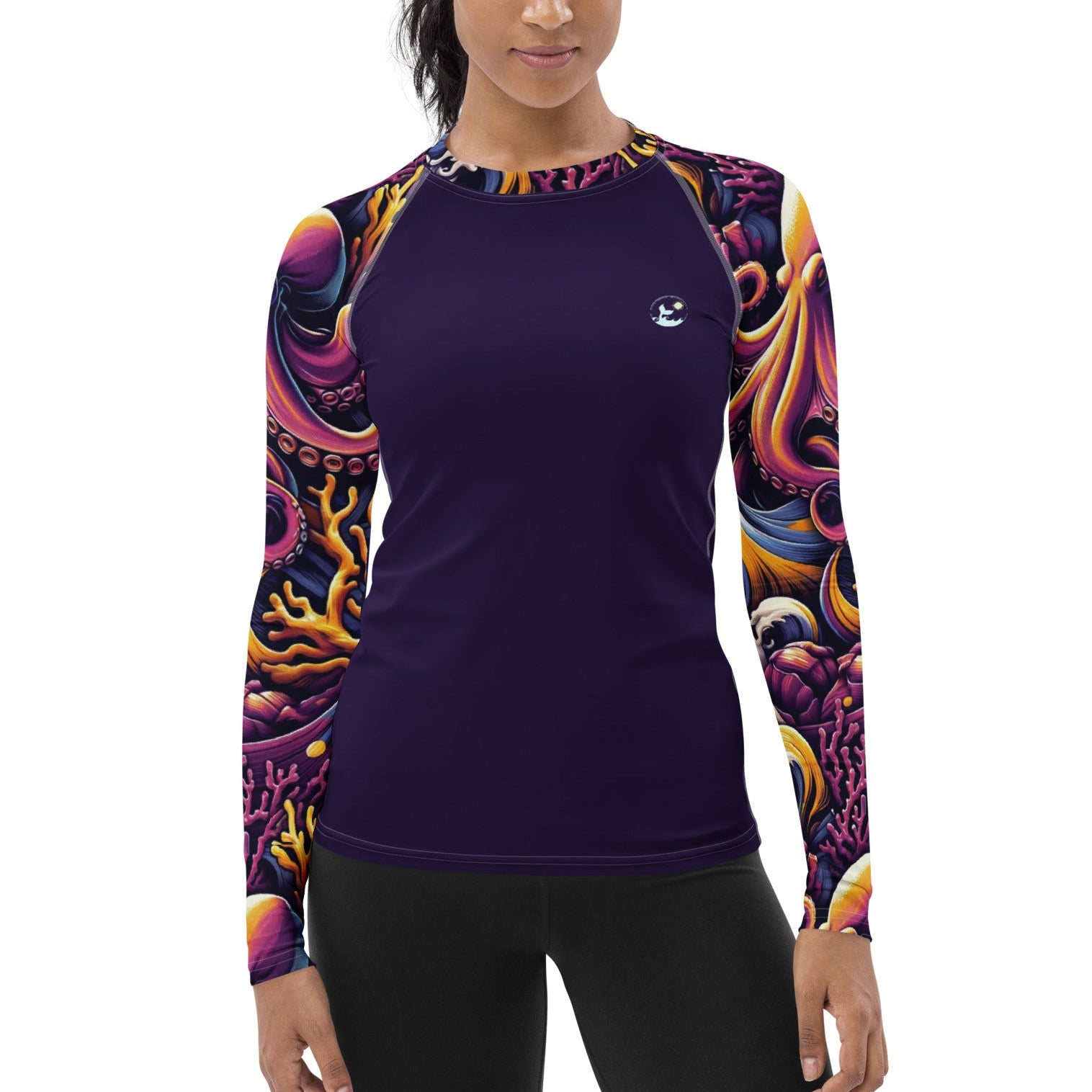
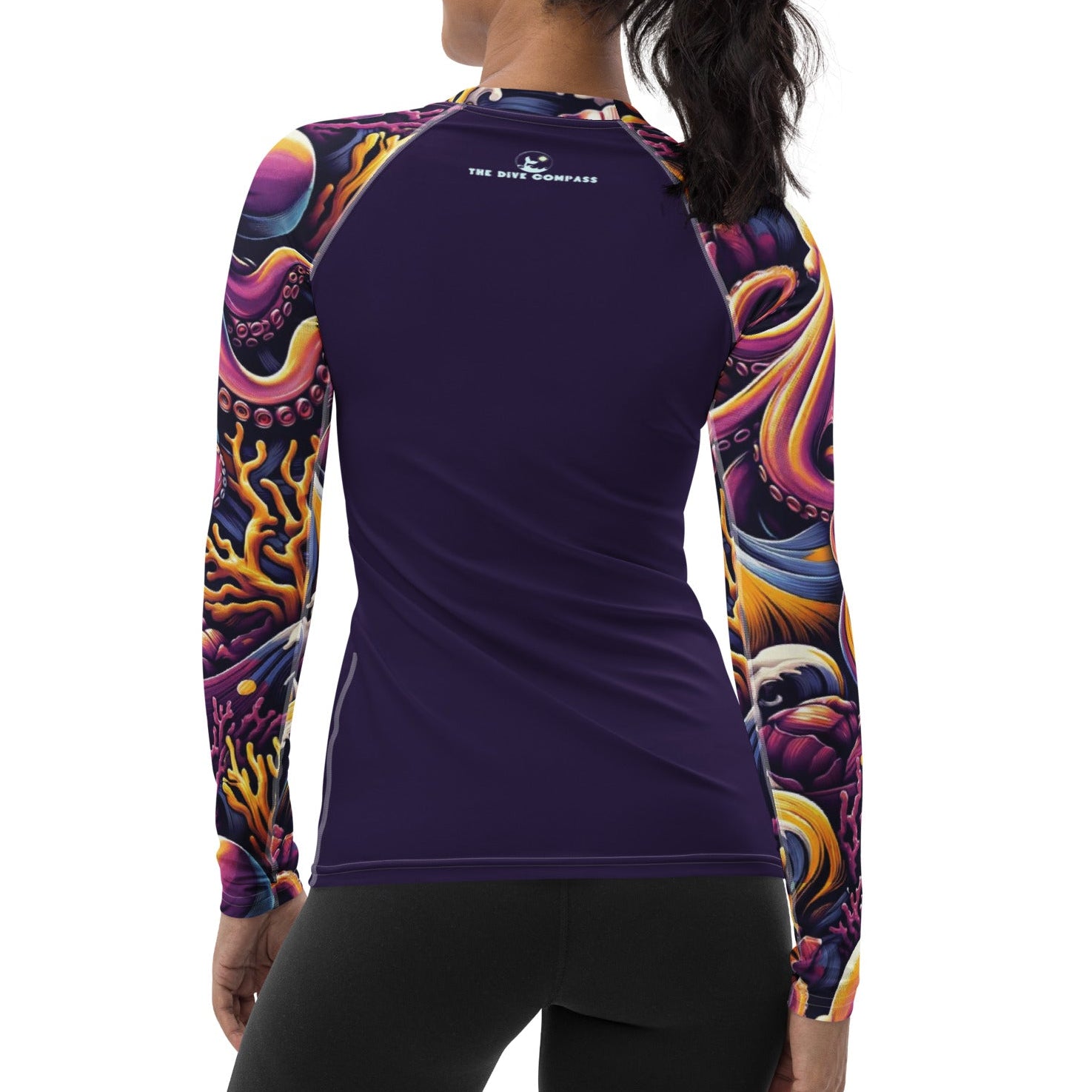
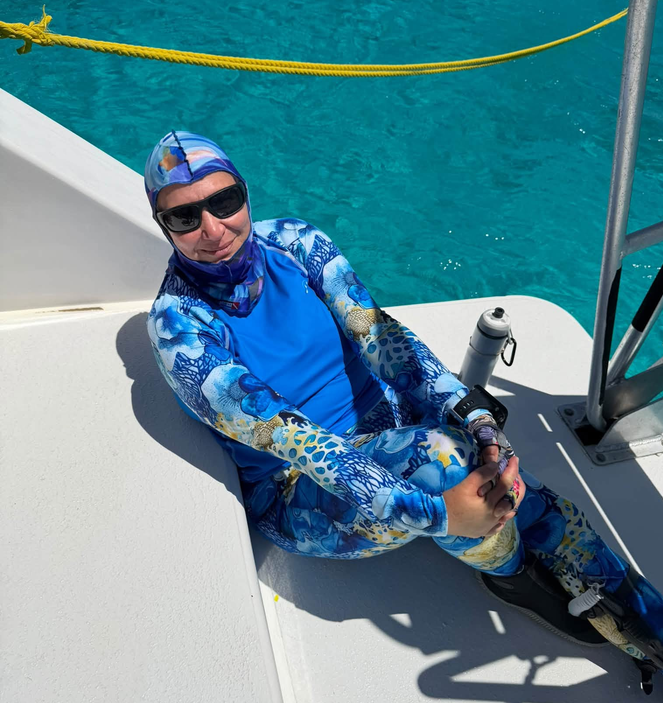
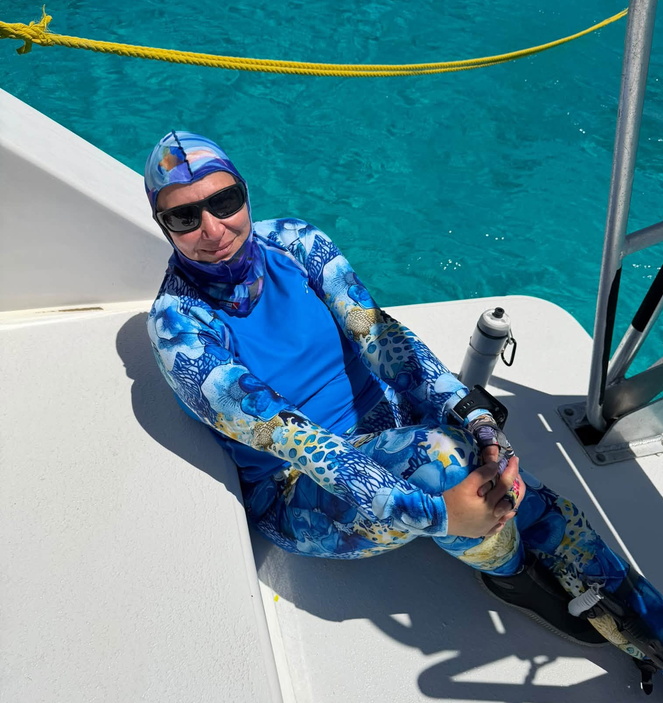
If you take one thing on a dive trip that isn't your swimsuit, take this. It does four jobs at once: stops neoprene chafing, makes the suit slide on instead of grabbing, gives you a UPF 50+ layer on the boat, and in warm enough water it's a dive skin on its own.
"This also works well under a wetsuit to make it easier to put on, and protects well against the sun without feeling too hot."PR S.A.P., Coral Blossoms Women's Rash Guard
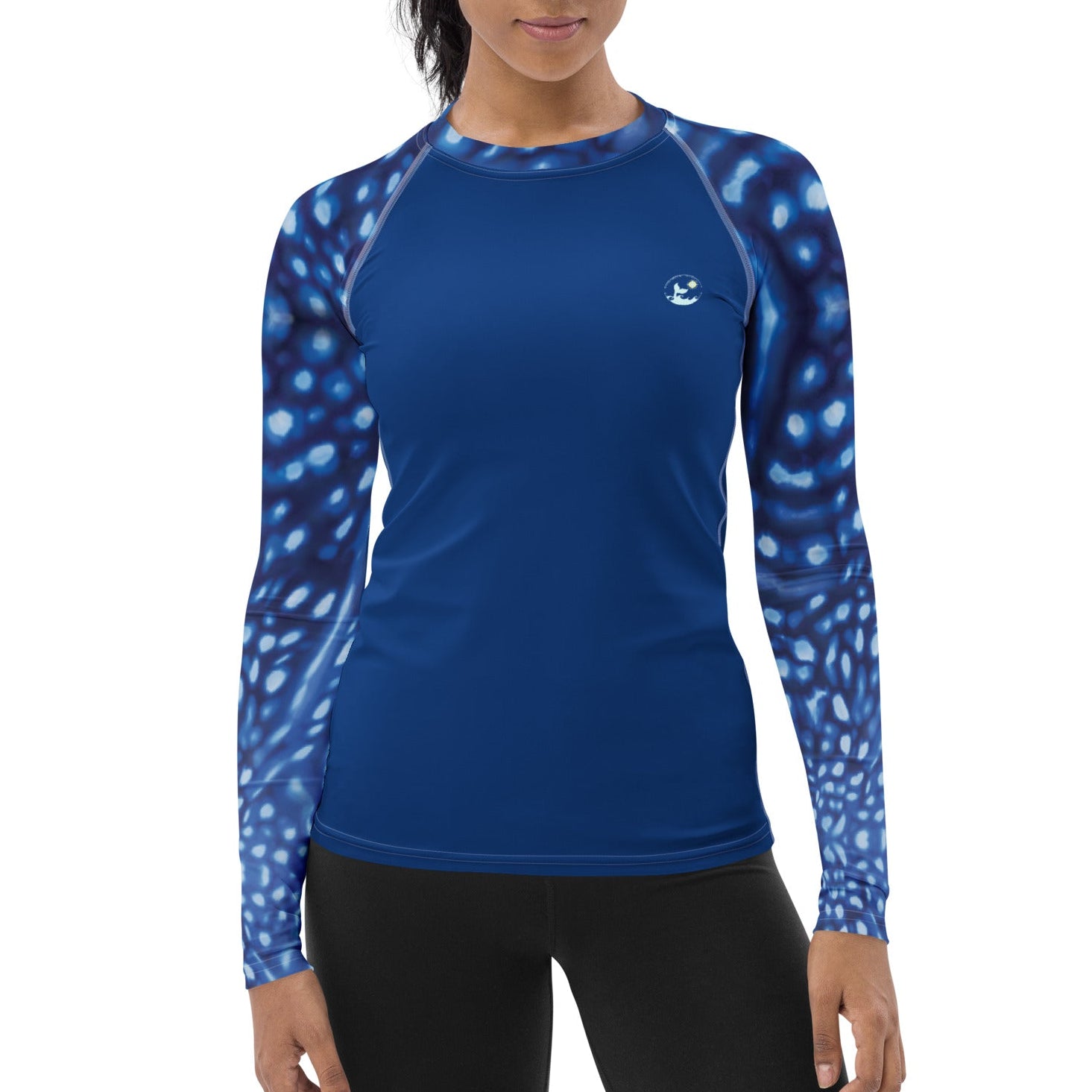
"I'm 5'8" 165 lbs and the size L fits perfectly…snug in the right places but not super tight. It has nice long arms and long torso which suits me and has been hard to find in other rash guards."Melissa, Whale Shark Blues Women's Rash Guard
Women's rash guards · Men's rash guards · Size guide
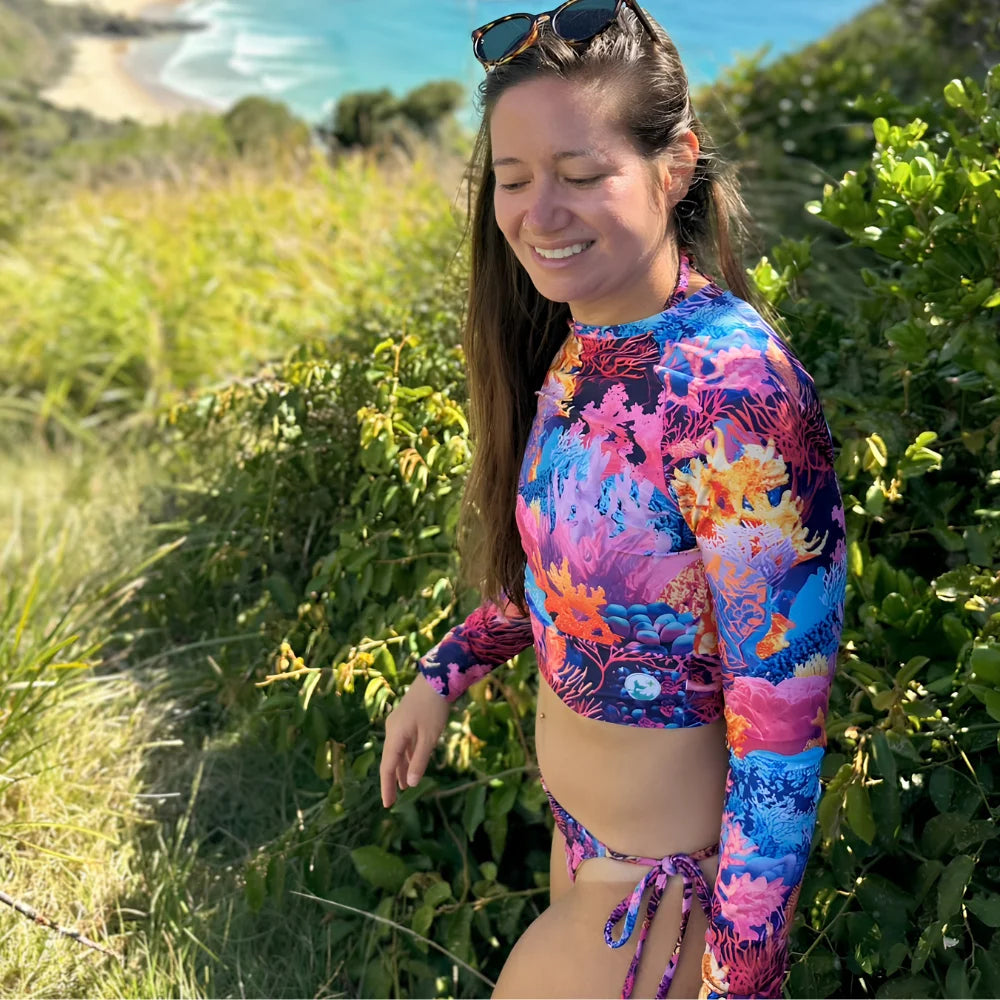
Cropped rashie
Same fabric, same sleeves, less torso. What I reach for when the water's warm and I want sleeve coverage without a full layer. It pairs with a high-waisted bottom so there's no gap at the middle.
Under a wetsuit it works, with one thing to know. The hem sits where the suit's waist compresses, so it can ride if you've sized it loose. Size true and it stays.
Scuba leggings

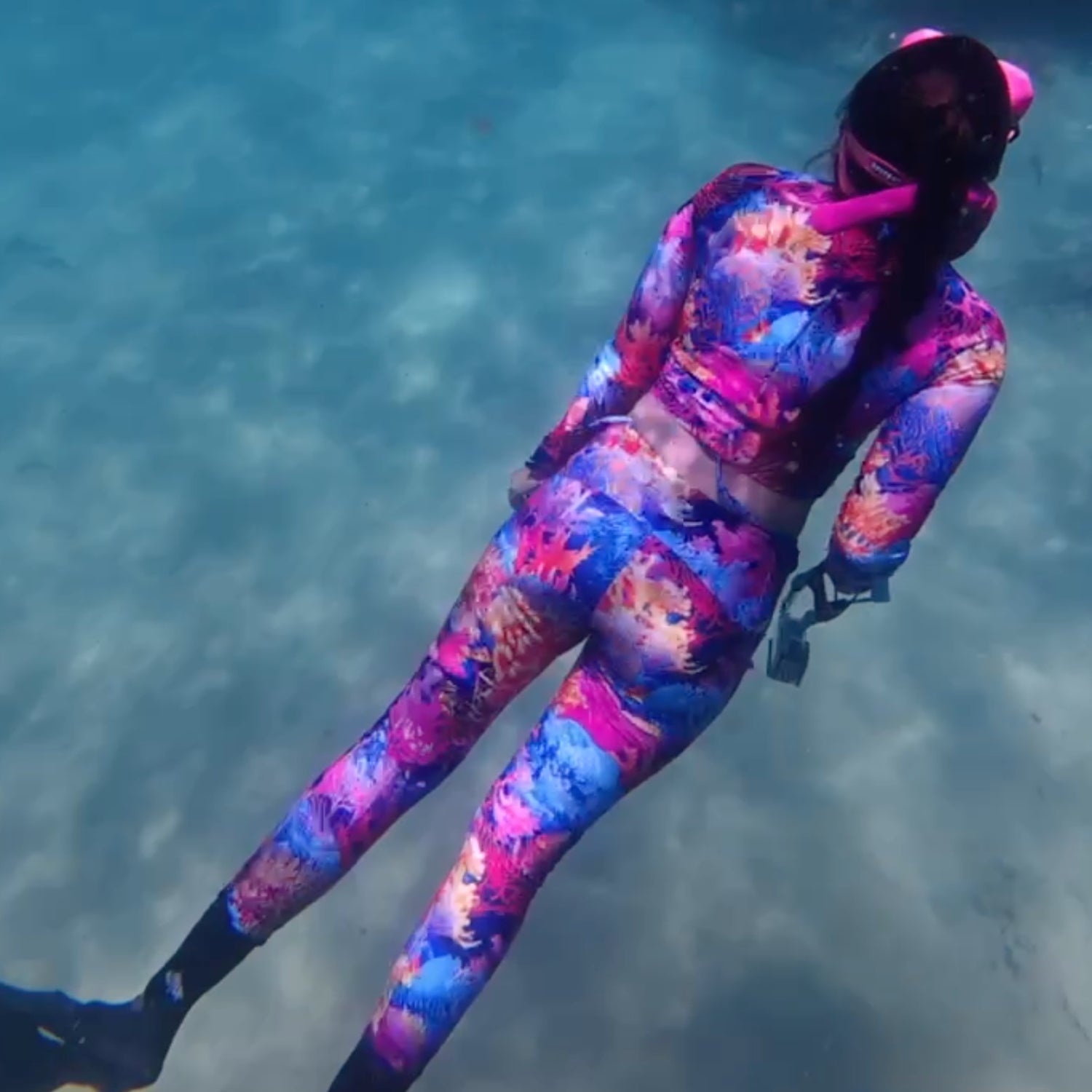
The piece divers skip and then wish they hadn't. They stop the thigh chafe you get from a rental suit, they help the legs pull up over damp skin, and in warm water a rash guard and leggings together are your exposure protection.
"Love the colours, pattern and fit! Size chart is accurate, and it has pockets (just make sure to check them before going in the water!). The material quality is great, and it protects well against the sun."PR S.A.P., Coral Blossoms Scuba Leggings
One-piece swimsuit: with a caveat
Clean under a wetsuit. Nothing to shift, no waistband, one layer.
The caveat is straps. A one-piece puts fabric across your shoulders exactly where a BCD sits, so strap placement matters more than on a bikini. Ours suits a lot of people and doesn't suit everyone:
"It is a good full piece suit; I bought it wear under my dive skin. The shoulder straps are just a touch too far apart, or I am narrow shouldered."Erica B., Turquoise Seas One-Piece (4★)
If you're narrow through the shoulders, better to know before you order. Ask me and I'll tell you honestly whether I think it'll work.
One-piece swimsuits · Size guide
String bikini: not for this
I sell these and I'm telling you not to dive them under a wetsuit. The ties are the whole point of a string bikini, and ties are exactly what you don't want under compression. A knot at the neck or hip becomes a pressure point, and pulling neoprene off over a tie is how a tie comes undone.
They're for the boat, the beach, and warm-water snorkelling. For neoprene, wear the scuba cut.
String bikinis, if you want them for what they're actually good at.
What is a dive skin, and do you need one?
A dive skin is a thin, full-coverage layer, usually a long-sleeve rash guard and leggings, worn either instead of a wetsuit in warm water or underneath one in cooler water.
It isn't for warmth. A dive skin gives you almost no thermal protection. What it gives you is coverage: from sun on the boat, from stings and hydroids on the reef, from neoprene rash, and from the general business of getting in and out of a suit twelve times over a week.
In water above about 29°C, plenty of divers wear a dive skin and skip the wetsuit entirely. I do, often.
Under a wetsuit, a dive skin is the single biggest improvement you can make to how easily the suit goes on.
What to wear under a wetsuit in cold water
Below about 26°C / 79°F, what's underneath stops being about comfort and starts doing real thermal work.
Layer rather than going thicker. A thermal base layer under a 5mm holds heat better than a 7mm on bare skin, because trapped water has less room to circulate. That's the whole principle a wetsuit works on, and a base layer makes it work harder.
What to wear:
- A full-length thermal rash guard, with long sleeves, a close fit and flat seams
- Leggings, full length, no gap at the ankle
- A 5 to 7mm suit over the top
- A hood, if your ears get cold before the rest of you does. Mine do.
What not to do: pile on bulk. Every extra millimetre of loose fabric is a millimetre the suit can't seal against, and a suit that can't seal flushes.
Cold is cumulative. You'll feel fine on dive one and shiver on dive three, so dress for the last dive of the day rather than the first.
How to put a wetsuit on more easily
Six things, in the order they'll help.
- Get your base layer fully on and flat first. Run a hand around the waistband and shoulders. Every fold you leave is a fold you dive with.
- Roll the suit, don't pull it. Turn the legs inside out to the knee, get your foot through, then unroll up the leg. Same with the arms.
- Work in sections. Both legs to the knee, then both to the thigh, then the hips. Yanking one leg to the hip while the other's at the ankle is how you tear a seam and how you end up out of breath before you've kitted up.
- Plastic bag on your feet if the suit's tight at the ankle. Old trick, still works, weighs nothing.
- A rash guard is the real shortcut. Neoprene grabs damp skin and slides over smooth fabric.
- Zip last, and get someone to check your neck seal. A folded seal leaks all dive and you won't notice until you're cold.
"I love this rash guard. It looks amazing and I helps me to put my wetsuit on for diving. 🤿 Plus it's super comfortable"Philipp R., Whale Shark Blues Men's Rash Guard
What not to wear under a wetsuit
- Cotton. Anything cotton. Holds water, stays cold, never dries. This is the mistake I made and the most common one there is.
- Loose swimwear. It bunches under compression.
- Wires, moulded cups, metal hardware. Rigid things become pressure points.
- Bulky seams across the shoulders or hips. That's where the BCD and weight belt sit.
- Regular underwear. See cotton.
- Swimwear that's already gone. Fabric that's lost its recovery behaves like loose swimwear even if it fits dry.
Do you need sunscreen under a wetsuit?
Not under the neoprene itself. It's covered, and sunscreen under a wetsuit mostly degrades the suit.
But yes, everywhere the suit doesn't cover. Face, ears, hands, the backs of your feet, and the strip at the back of your neck. Put it on well before you kit up so it has time to absorb, and use a reef-safe formula.
And one honest note about rash guards, because I see this claim made badly. UPF 50+ is a rating for the fabric. It's what the fabric blocks, where the fabric is. It doesn't cover your face, your hands, or your ears, and it isn't a substitute for sunscreen on the parts it doesn't reach. I'd rather say that than let you find out on day three of a liveaboard.
Between dives

The surface interval is where the wrong base layer really tells. Cotton is still wet. Cheap swimwear is still cold. A rash guard and leggings dry on the boat and give you sun cover while they're doing it, which on a two-tank morning is the difference between comfortable and burnt.
Bring a second set for multiple days. Not as an upsell, but as the thing every diver works out eventually, usually after pulling on something still damp at 6am.
How to look after dive swimwear
Dive gear dies from salt and heat, in that order.
- Rinse in fresh water after every dive day. Not at the end of the trip. Salt crystallises in the fibres and grinds them apart from the inside.
- Wash cold and gentle, inside out. One of our reviewers put it better than I would: "The leggings are washable at 30 degrees Celsius, that's all I need!" says Sarah G.
- Hang dry in the shade. Never a dryer, and that goes for your swimwear and your wetsuit both. Heat destroys elastane, and elastane is what makes either of them hold shape.
- Keep it clear of the velcro on your BCD. Fastest way to pull a thread on any technical fabric.
And one more I'll be straight about not being a perfect fix. Wash it in a GUPPYFRIEND bag. Recycled polyester still sheds microfibres, and the bag catches most of them. Recycled fabric shedding into the ocean rather defeats the point, so I'd rather name the problem than leave it out.
A note for surfers, and for men
Most of this holds if you're surfing rather than diving, with one difference: you're moving more and paddling, so chafe at the underarm and the neck matters more than it does on a dive. A close rash guard solves both. What doesn't change is cotton, which is still the wrong answer.
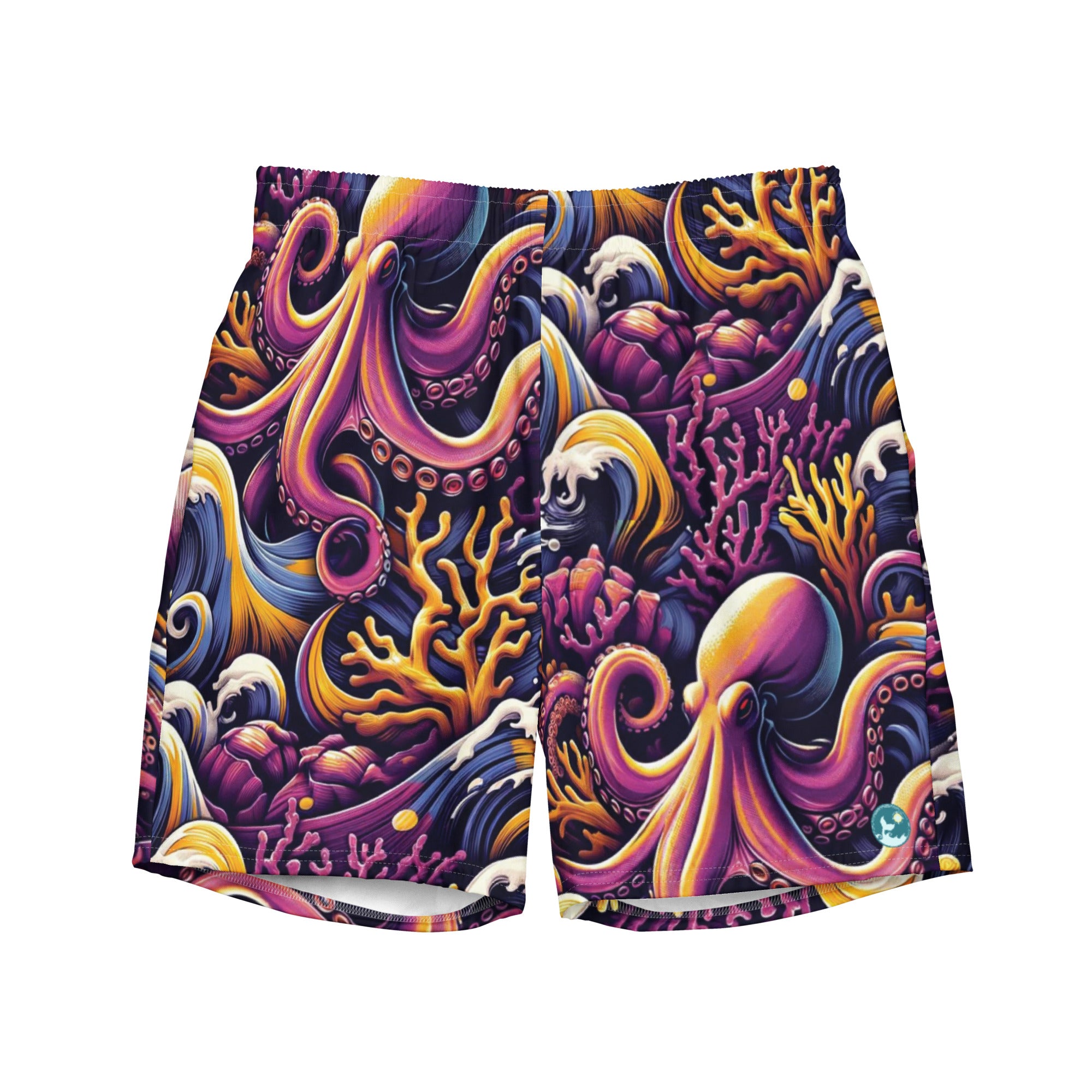
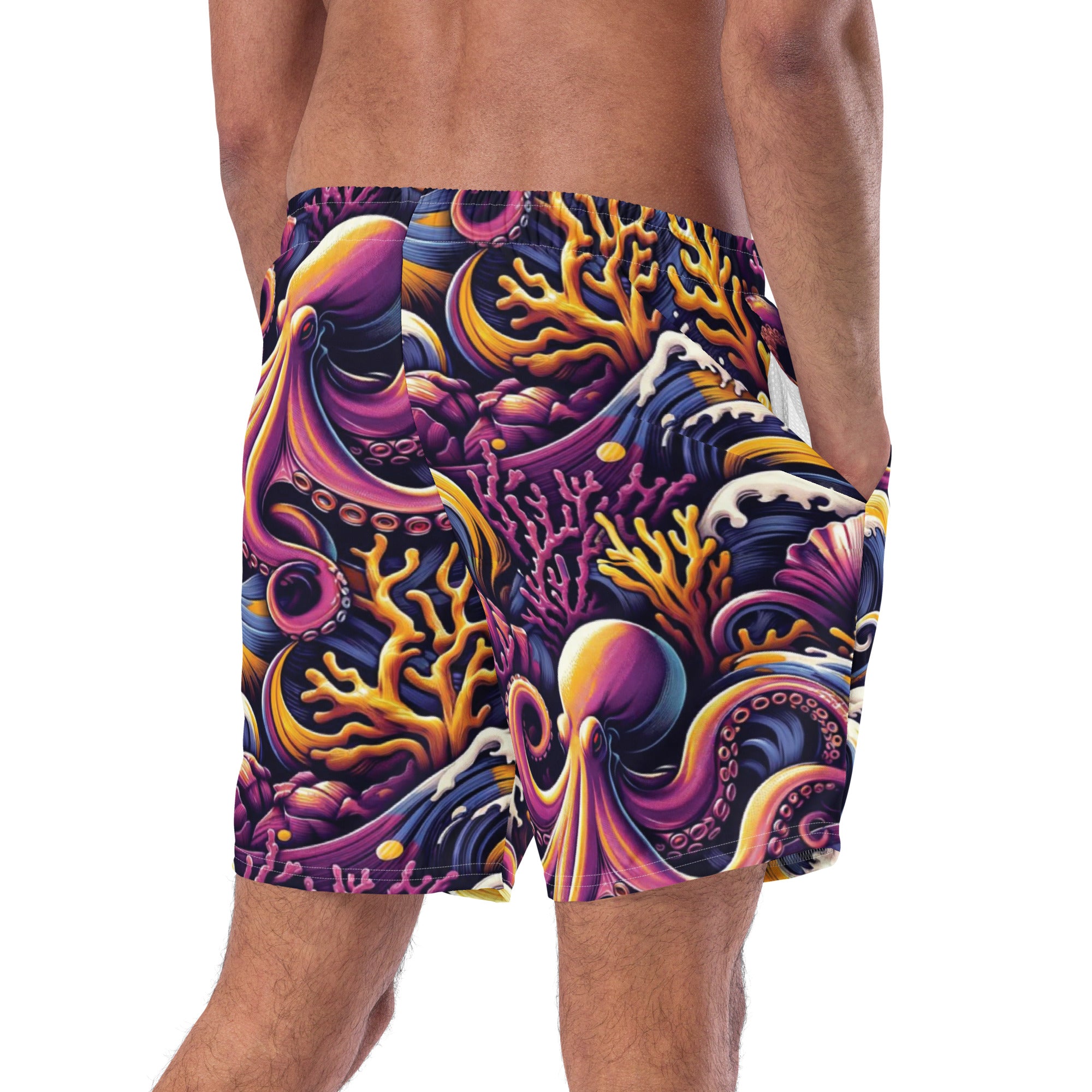
For men: a rash guard does the same work. Trunks under a wetsuit are fine if they're cut close with flat seams. Board shorts with a bulky waistband and a fly are not.
"My favourite swim trunks ever! They're so comfortable and cause no chafe."David, Humpback Dreams Swim Trunks
Men's rash guards · Swim trunks · Everything for men
Common questions
Do you wear underwear under a wetsuit?
No. Regular underwear is cotton, which holds water, stays cold and never dries between dives. Wear swimwear designed for the water instead. A high-waisted bikini bottom gives you the same coverage and behaves properly wet.
Do you wear a swimsuit under a wetsuit?
Yes, and it's what most divers do. Close-fitting swimwear with no wires, no moulded cups and no bulky seams is ideal.
Can you wear a bikini under a wetsuit?
Yes, and in warm water it's the most common choice. What matters is whether it stays put. A bikini cut for lounging shifts the moment neoprene compresses it. One cut for diving doesn't.
Do you wear anything under a wetsuit at all?
You can dive with nothing underneath. In a rental I'd rather you didn't. A base layer is more hygienic, stops neoprene chafing on a long day, and makes the suit noticeably easier to get on.
Are wetsuits meant to be tight?
Snug, yes. A wetsuit holds a thin layer of water against you, so a loose one flushes cold water through and never warms up. It should be close everywhere without restricting your breathing or shoulders.
Should swimwear under a wetsuit be tight?
Close, not tight. Size true to your measurements. Loose fabric bunches under compression, and a fold under a wetsuit is something you feel for the whole dive.
How should a wetsuit fit a woman?
Close at the neck, the wrists and the ankles, with no gaping at the lower back when you bend, because that's where cold water gets in. You should be able to raise both arms over your head without the suit pulling at the shoulders. Snug on land is correct, and it'll feel easier in the water.
What's the best bikini to wear under a wetsuit?
One with nothing rigid in it. No underwire, no moulded cups, no chunky hardware. High-waisted bottoms sit above where the suit creases, and flat seams don't chafe.
What is a dive skin?
A thin full-coverage layer, usually a long-sleeve rash guard and leggings, worn instead of a wetsuit in warm water or underneath one in cooler water. It's for sun, stings and neoprene rash, not for warmth.
What to wear under a wetsuit in cold water?
A full-length thermal rash guard and leggings as a base layer, under a 5 to 7mm suit. Layer rather than going thicker, because a thermal base under a 5mm holds heat better than a 7mm on bare skin.
Do you need sunscreen under a wetsuit?
Not under the neoprene, but yes on everything it doesn't cover: face, ears, hands, feet and the back of the neck. Reef-safe, and applied well before you kit up.
How do you put a wetsuit on more easily?
Wear a rash guard underneath, because neoprene grabs damp skin and slides over smooth fabric. Then roll the suit rather than pulling it, and work both legs up in sections rather than one at a time.
Can you put a wetsuit in the dryer?
No. Heat destroys the neoprene's flexibility and the elastane in your swimwear. Rinse in fresh water and hang dry in the shade, inside out first.
What do you wear under a shorty wetsuit?
Usually just swimwear. A shorty already leaves your arms and legs bare, so a rash guard underneath is mostly about sun cover on the boat rather than warmth in the water.
What do men wear under a wetsuit?
A rash guard, or close-fitting trunks with flat seams. Board shorts with a bulky waistband don't work, because the seams sit where the suit compresses.
What do you wear under a drysuit?
Different question, and a longer answer. A drysuit needs proper thermal undergarments, not swimwear, because it keeps you dry rather than warming trapped water. Nothing in this guide applies to drysuits.
The short version
Something close-fitting. Something that isn't cotton. Something with no wires and no bulky seams. Sized true.
Get that right and you'll stop thinking about it, which is the entire point. The best dive kit is the kit you forget you're wearing.
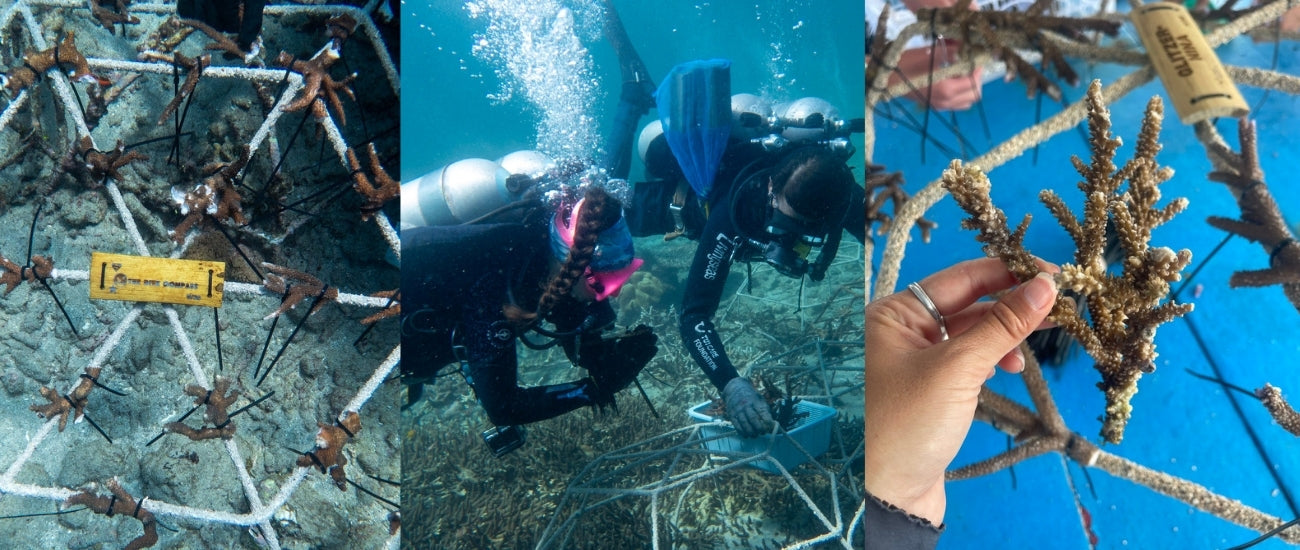
See what we make → Every piece is made to order in your size after you buy it, in sizes XXS to 6XL depending on the style. 10% of every order funds coral restoration at Padang Bai in Bali, with Livingseas Foundation.
Keep reading
- Rash guard or wetsuit? Water temperature by dive destination
- How to choose a rash guard for scuba diving
- Scuba leggings for diving: are they worth it?
- The dive trip packing list


















Leave a comment
This site is protected by hCaptcha and the hCaptcha Privacy Policy and Terms of Service apply.