
Skip to content

Cart

Your cart is empty

Transforming dive wear into a restoration movement

Our Impact

Every Dive Compass order plants corals on a reef in Indonesia.

This page shows exactly how many, and how much has been donated thanks to your orders 🩵

The numbers right now

Last updated July 2026

$2,154

Donated to Ocean Conservation

840

Coral Fragments Planted

100%

Made to order, No Excess Waste

Year by year

Use this text to share information about your brand with your customers. Describe a product, share announcements, or welcome customers to your store.

Annual donations to coral restoration by year
Year Donated Corals Planted
2024 $98.00 0
2025 $960.00 120
2026 to date $1,327.28 720
Total $2,385.28 840

Who we fund, and what they actually do

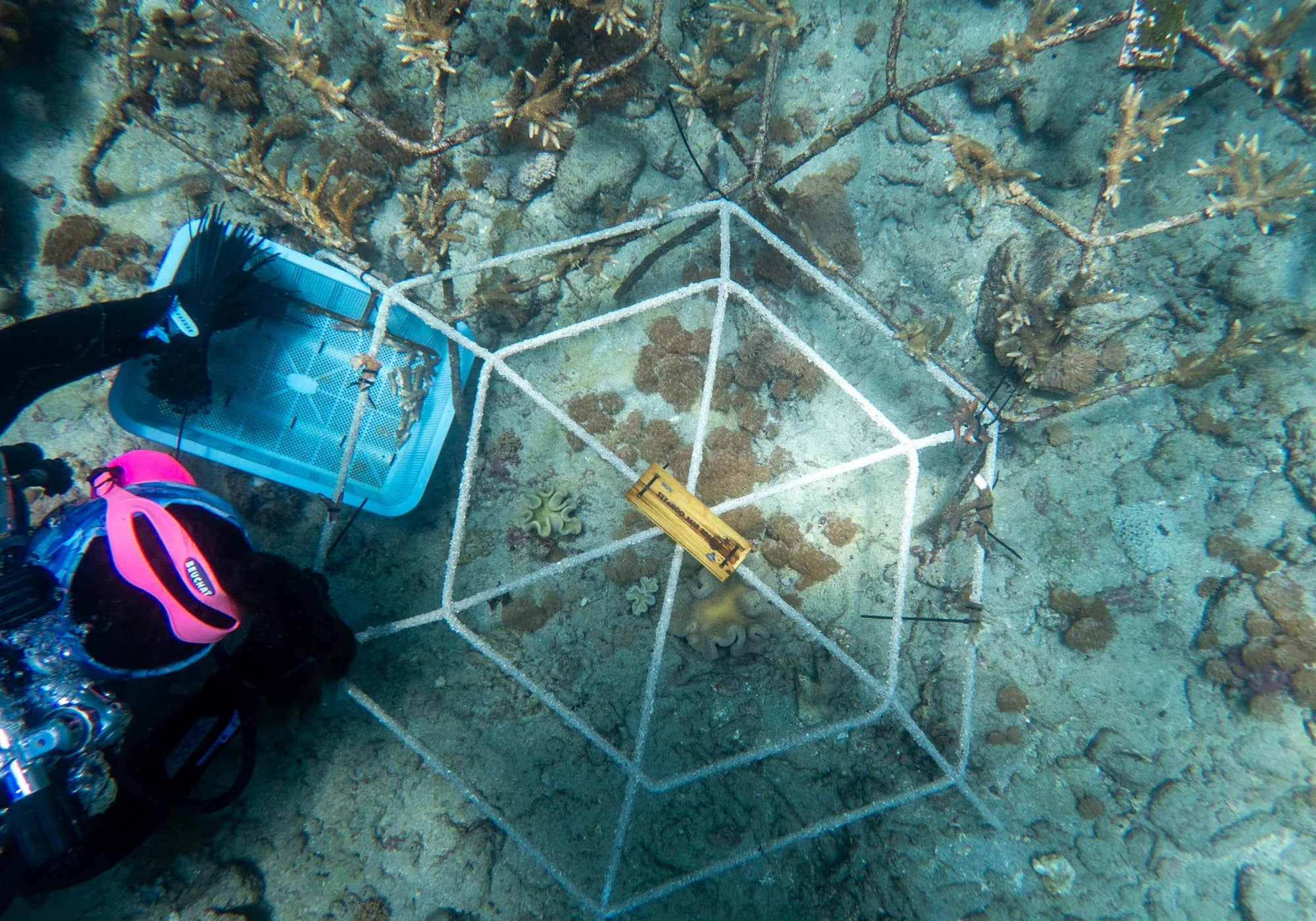
We fund Livingseas Foundation, a coral restoration organisation based in Bali. Their restoration site is at Padang Bai, on Bali's east coast.

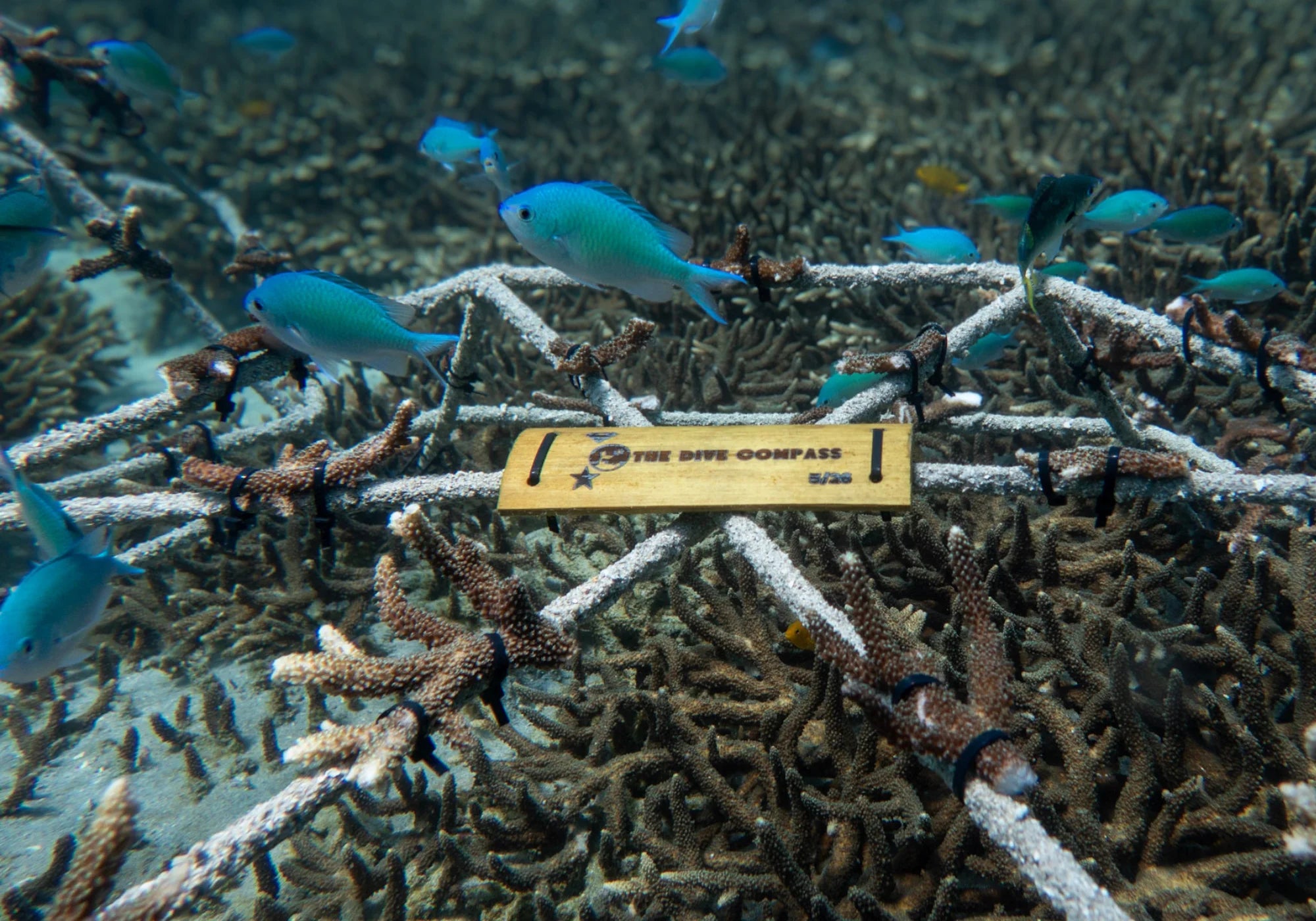
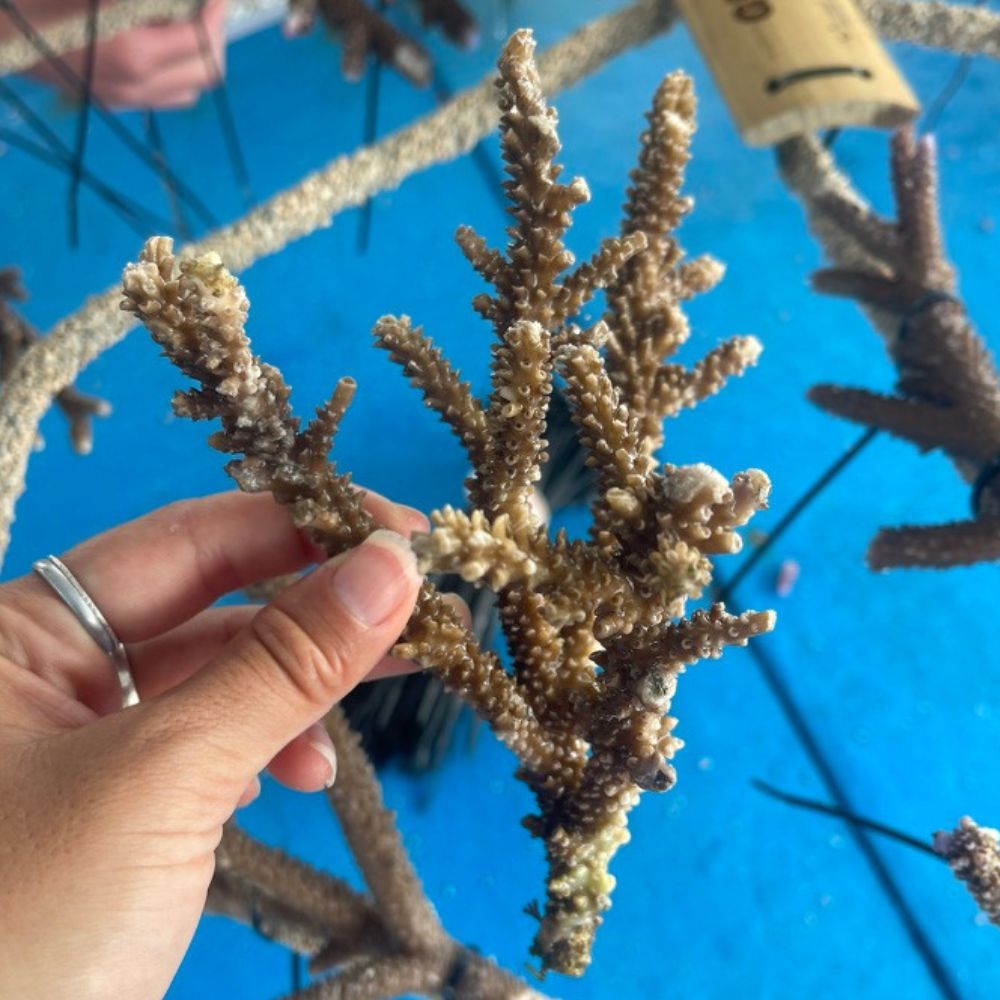
Their work isn't symbolic. Fragments are propagated, physically attached to reef structures by divers, and then monitored, because a coral that's planted and then forgotten isn't a restored reef. Regular monitoring happens on newly planted reef structures where dead corals are removed and replaced with living fragments, and fast growing species like sponges and soft corals that smother the baby hard corals are removed from the structures until the coral grows large enough to sustain themselves.

Hard corals are the backbone of the reef, without hard coral cover, marine like like fish, crabs, shrimp, eels and more don't have a place to live. That's why coral restoration always focus on hard corals, since the hard corals are what brings the life back to the reef.

The corals that Livingseas plants in Padangbai are corals that are being rescued from a coastal reclamation zone in Cadidasa, where a government project will destroy the reef that has grown at 5 meters. Since these healthy corals are harvested from around 5 meters, that makes them especially heat resistant since they've grown their whole lives in the warmest depth of the reef. Once the government coastal reclamation project has finished, Livingseas plans on returning to the area and rebuilding the reef that was destroyed.

I've dived that site, I've placed fragments there myself. It's the reason I chose them over an organisation I'd only read about, I wanted to fund work that not only I've seen first hand, but that I've also seen the impact that they've made. I've seen many attempts at coral restoration, but this is the first coral restoration project I've seen recover the coral ecosystem first hand.

Why we publish two numbers instead of one.

The money donated and the corals planted are related, but they aren't a clean one-to-one. We donate 10% of every purchase. Livingseas Foundation uses that funding to propagate, transplant and monitor coral — and the cost of getting a fragment onto a reef and keeping it alive varies with the season, the site, and what the reef needs that month.

So the honest version is: the donation is the promise, and the corals are the result. We report both, and we don't round either one up.

How the Save Our Seas Pledge works

10% of every purchase — calculated on the product price, before tax and shipping.

Not 10% of profit. Not 10% "of selected items." Not 10% in a good month. 10% of the product price on every order, every time.

Because that donation scales with what you buy, so does the coral.

What we don't claim

Most brand impact pages only tell you the good part. Here's the rest.

We're not carbon neutral, and we don't say we are. Our garments are printed and shipped from production partners, and shipping has a footprint. We haven't offset it, and we're not going to claim a number we can't stand behind.

Recycled polyester is better, not perfect. It gives plastic a second life and uses meaningfully less energy than virgin polyester. It also still sheds microfibres in the wash, which is why we recommend a GUPPYFRIEND bag on every product page rather than quietly leaving it out.

Coral restoration is not a substitute for climate action. Reefs are dying primarily because the ocean is warming. Planting coral helps specific reefs recover and supports the people doing the work. It does not solve coral bleaching, and anyone telling you otherwise is selling something. We have chosen a reef in the heart of the coral triangle with a partner, Livingseas Foundation, who plant corals which are resilient to warming for the best success at building back a coral reef ecosystem.

Our numbers lag. Donations are sent monthly, and planting happens on Livingseas' schedule, not ours. The figure at the top of this page is accurate as of the update date and will always trail real time by a little.

We'd rather you trust the numbers we do publish than be impressed by ones we can't back up.

People on a boat in the water working on coral restoration with mountains in the background

Beyond the donation

The 10% is the donation, but what also matters is the sustainability behind your order.

Made to order. Nothing is made until you order it. No warehouse of unsold stock, no end-of-season landfill. It's why delivery takes longer than Amazon, and it's a trade we make deliberately.

Recycled polyester. Our swimwear is made from post-consumer recycled polyester — 75% for US production, 74–88% for EU production depending on the piece; the exact split is on each product page.

Third-party certified fabric. Our fabric is certified to OEKO-TEX Standard 100 (tested for harmful substances) and the Global Recycled Standard (verified recycled content and supply chain). Our sublimation inks are OEKO-TEX certified too.

Those are independent certifications, not labels we made up.

The Save Our Seas Pledge is our program, it's a commitment we've set ourselves, not a certification, and we won't dress it up as one.

Woman relaxing in a pink hammock by the ocean

About

Who's behind this

I'm Andrea, a divemaster, ocean lover, dreamer, and the person who started The Dive Compass. I've been diving for 15 years across Indonesia, Mexico and the Red Sea, and I've personally helped plant over 1,000 coral fragments.

I started this brand because I got tired of swimwear that wasn't built for diving, and because I wanted the thing I sold to improve the ocean and coral reefs. More about me here.

Frequently Asked Questions