


Article: Scuba Diving the Maldives: When to Go & What to Pack
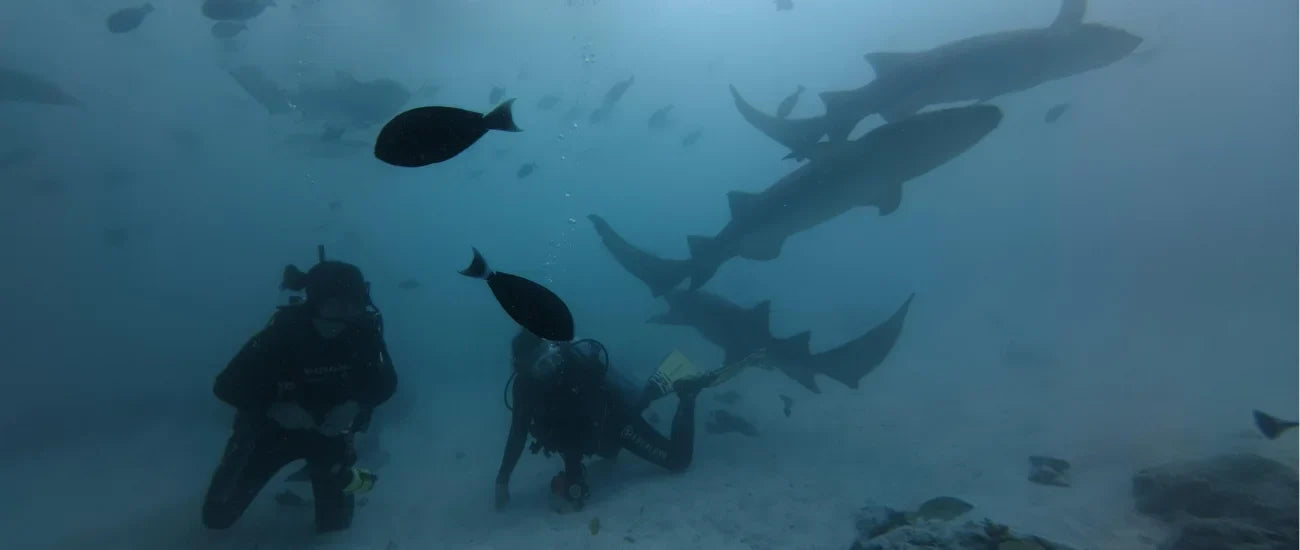
Scuba Diving the Maldives: When to Go & What to Pack
I went to the Maldives during whale shark season & I didn't see a single whale shark.
I'm telling you that up front because most Maldives diving guides read like a travel brochure, and the ocean doesn't work like that.
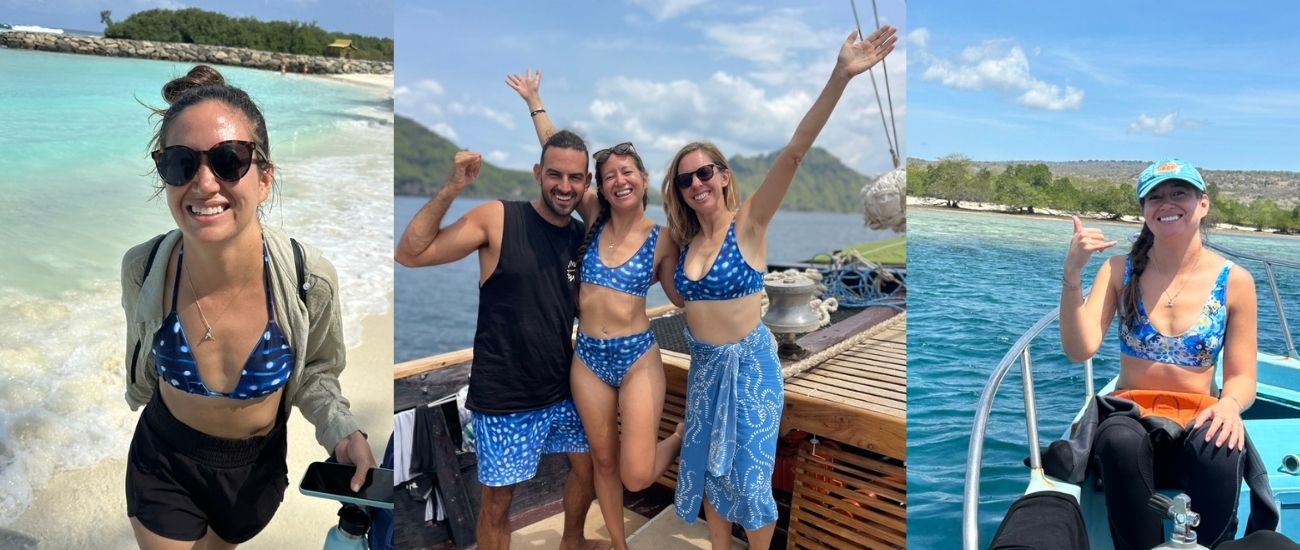
What I did see, on my most recent trip, was a manta train — a line of rays following each other nose-to-tail through a cleaning station, looping back around like they had nowhere better to be. I saw mantas on almost every dive. I did a night dive where the crew dropped lights into the black water, the plankton swarmed up toward the glow, and the mantas came barrel-rolling through the beam to feed. Six of us, my partner and four of my closest friends, floated there in the dark, completely undone by it. We've already started talking about making the trip an annual thing.
That's the Maldives. It is one of the best big-animal dive destinations on the planet, and it is genuinely worth the long flights. But knowing when to go, how to do it, and what to pack will make or break the trip. So here's the honest version, from someone who has now dived it twice, once from local islands, once from a liveaboard.
And it really is as gorgeous as the photos. Powder-white sand, water so clear it barely looks real, the whole postcard. It carries a high-end, slightly bougie resort reputation, and that part is true, this isn't really a backpacker destination. But here's what that reputation gets wrong: you can absolutely dive the Maldives on a budget. My first trip, back in 2018, I was on a tight one, and I made it work, diving and staying on local islands, and seeing some genuinely incredible things underwater.
First, a quick word on who's telling you this
I've been diving since 2008, when I did my Open Water course in Belize. I took a long dive break, came back to it, and did my Advanced Open Water in 2019 in the Similan Islands of Thailand, on a liveaboard, as it happens. I've been a PADI Divemaster since 2022, certified in Dahab, Egypt. I've now dived the Maldives twice.
I'm not a travel agent & I don't get a commission from a resort but this is just what I'd tell a friend who asked me where to dive next.
Best time to dive the Maldives
Here's the thing nobody tells first-timers: the Maldives has two seasons, and they are almost opposites. Which one you pick depends entirely on what you want to see.
The water itself doesn't change much — it sits at a bathtub-warm 27–30°C (81–86°F) all year round. What changes is the monsoon, and with it the visibility and the wildlife.
Northeast monsoon — roughly December to April (the dry season). This is the postcard Maldives. Calm seas, sunshine, and visibility that regularly hits 25–40 meters. If you want glassy water, easy conditions, and the clearest photos, this is your window. Many experienced divers will tell you February is the single best month. The trade-off: the big filter feeders are around but less concentrated, because there's less plankton in the water to pull them in.
Southwest monsoon — roughly May to November (the wet season). More plankton, occasional storms, and visibility that can drop to 10–25 meters. It sounds worse on paper. In practice, that plankton is exactly what turns the Maldives into one of the great wildlife spectacles on earth. Manta rays gather at cleaning stations and feeding aggregations, and the famous Hanifaru Bay in Baa Atoll, a UNESCO Marine Biosphere Reserve, fills with hundreds of mantas (and occasionally whale sharks) feeding in the plankton blooms, with peak action roughly June to October. Prices are also lower in this shoulder season.
A simple way to choose: go December to April for visibility and calm; go roughly June to October if mantas and whale sharks are the whole point of the trip. Just know that even "whale shark season" guarantees nothing — which brings me to the part of this guide I care about most.

Liveaboard vs. local island: how to actually choose
I've done the Maldives both ways, and they are completely different trips. This is the decision that matters most, so I'll give you the real version.
Local island diving (the budget-friendly way)
On that first 2018 trip I stayed on local islands and dived from there. This is by far the more affordable way to dive the Maldives — you stay in a guesthouse on an inhabited island, eat local food, and do one or two day-trip dives with a nearby center.
I stayed on two: Maafushi and Fulidhoo. Honestly, Fulidhoo a far better vibe, smaller, mellower, more of that quiet-island feel. Maafushi felt a little too built-up and touristy for me. If you're going the local-island route on a budget, Fulidhoo would be my pick.
The catch with local islands is that you're tied to one area, and you're at the mercy of day-trip logistics. You'll get fewer dives in, and you won't cover much of the country. For a lot of travelers, that's a totally fair trade for the lower cost.
Liveaboard diving (the full-immersion way)
My most recent trip was a liveaboard through the Blue Force Fleet, up through the central atolls and into South Ari. A liveaboard is exactly what it sounds like: you live on the boat, and the boat moves while you sleep.
The difference is staggering. You're diving three to four times a day, and over a week you can rack up 20-plus dives, including night dives you'd almost never get from a day-trip operation. You wake up at a different site, you cover huge stretches of the archipelago, and you're with the same crew of divers the whole time. For our group of six, the boat itself became half the holiday.
A liveaboard costs more and asks more of your time, but if your goal is maximum diving and seeing more of the Maldives than a single atoll, nothing else comes close.
The short version: budget or shorter trip → local island (I'd recommend Fulidhoo). More time, more dives, more of the country → liveaboard.

The atolls and the marine life
Most first liveaboards work the central atolls, and for good reason — this is where a lot of the headline encounters happen.
Mantas are the Maldives' signature animal, and they did not disappoint. I saw them on the majority of our dives, watched that manta train I mentioned, and did the unforgettable plankton-lit night dive. If you've read my piece on the ocean creatures every diver dreams of seeing, you'll know it took me over 100 dives to see my first manta, so to have them on nearly every dive here still feels surreal.
Whale sharks are the other big draw. South Ari Atoll holds the largest known year-round whale shark aggregation in the country, inside a Marine Protected Area. "Year-round" is the key phrase, they're genuinely possible any month, which is more than most destinations can say. We planned to push on to Hanifaru Bay for the mantas, but you only really commit to that if the animals are actually there, and they weren't aggregating for us the day we had planned. The ocean doesn't read your itinerary.
Beyond the giants, expect reef sharks on the channel dives, turtles, big schools of fish riding the currents, and the kind of healthy, busy reef that reminds you why you got certified in the first place.
A whale shark, ethics, and the trip I'll always remember anyway
So, the whale sharks. I went specifically during the season. We did everything right. And we didn't see one.
Here's what I want you to take from that. First: manage your expectations. Whale shark encounters are never guaranteed, even in South Ari, even in season. Anyone who promises you otherwise is selling something.
Second, and more important, be careful how you see them. Some whale shark encounters in the Maldives are not as ethical as they should be. I've watched the way it can go: a single animal trying to feed at the surface, suddenly surrounded by boats and a scrum of snorkelers all kicking to get on top of it. That poor creature is just trying to eat plankton and live its life. I'd genuinely rather not see a whale shark than be part of that.
If a whale shark encounter is on your list, choose operators who keep their distance, cap numbers, and follow responsible-encounter guidelines, look for ones affiliated with the local whale shark research programs. The encounter worth having is the one where the animal is free to swim away.
Cultural awareness: what to know before you go
This is the section most dive guides skip, and it matters, especially for women.
The Maldives is a Muslim country, and on inhabited local islands you cannot walk around in a bikini. Most local islands set aside a designated "bikini beach" where swimwear is fine; everywhere else, you cover up, shoulders and knees covered, that sort of thing. It's not a hassle once you know, but it will catch you off guard if you don't.
The rules relax depending on where you stay:
- Local islands: the most conservative. Cover up off the bikini beach.
- Liveaboards: more relaxed and Western-friendly, swimwear is fine on deck — though ours still preferred real clothes at mealtimes, even eating outside.
- Resort islands: the most relaxed of all, since they're private. Just know that some resort islands lean more Western and some are more conservative, so it's worth checking the vibe of your specific resort before you pack.
One more practical thing tied to all this: alcohol is illegal in the Maldives. On a local island there's no post-dive beer waiting for you — you won't find alcohol for sale anywhere on inhabited local islands. The exceptions are liveaboards and resort islands, both of which can serve it. So if a cold drink at the end of a long dive day matters to you, that's worth factoring into where you stay.
None of this should put you off. It's simply part of traveling somewhere with a culture different from your own, and a little respect goes a long way. It also shapes what you bring, which is the next thing.

What to pack & what to wear diving the Maldives
Because the water is so warm — 27–30°C — you do not need a thick wetsuit here, unless you're always cold like me. Most divers are comfortable in a 3mm, a shorty, or even just a rash guard and dive leggings across a week of repetitive dives. (I get into the full rash-guard-vs-wetsuit breakdown in this guide if you want to dial it in.)
Here's what I'd never travel to the Maldives without:
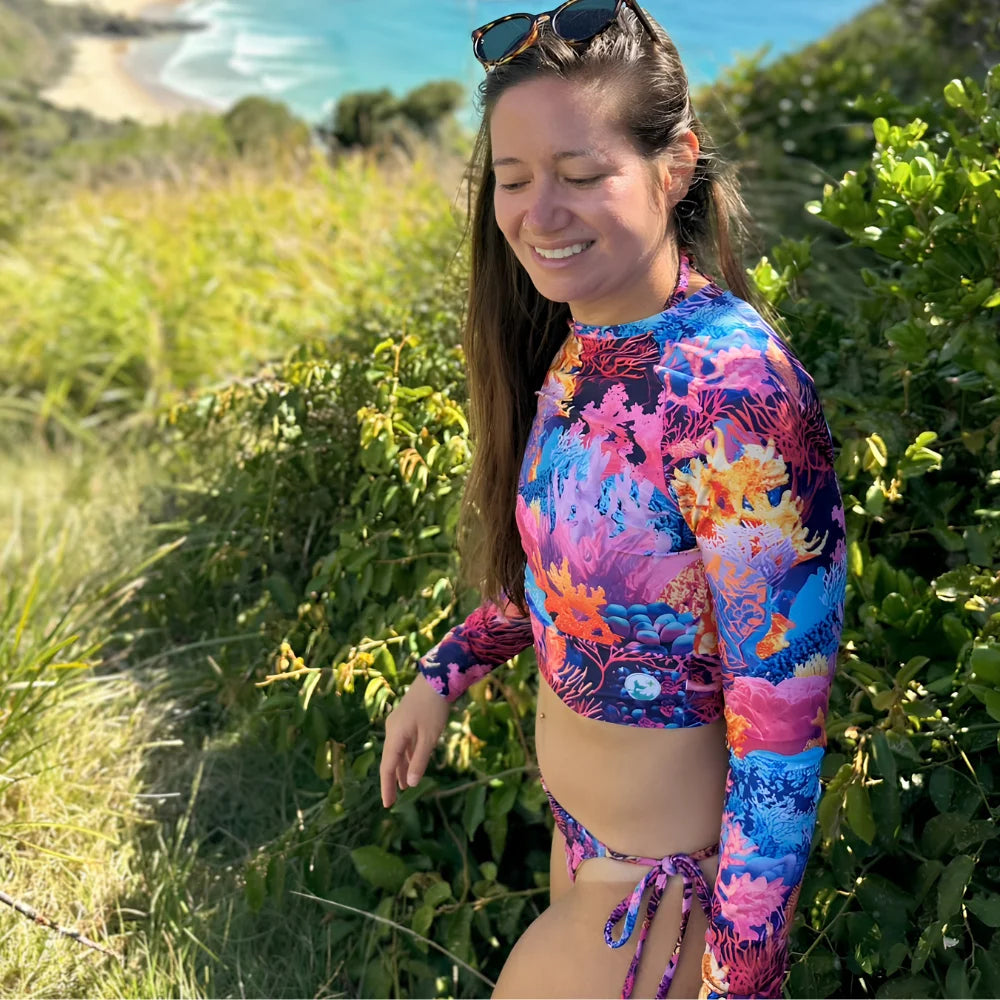
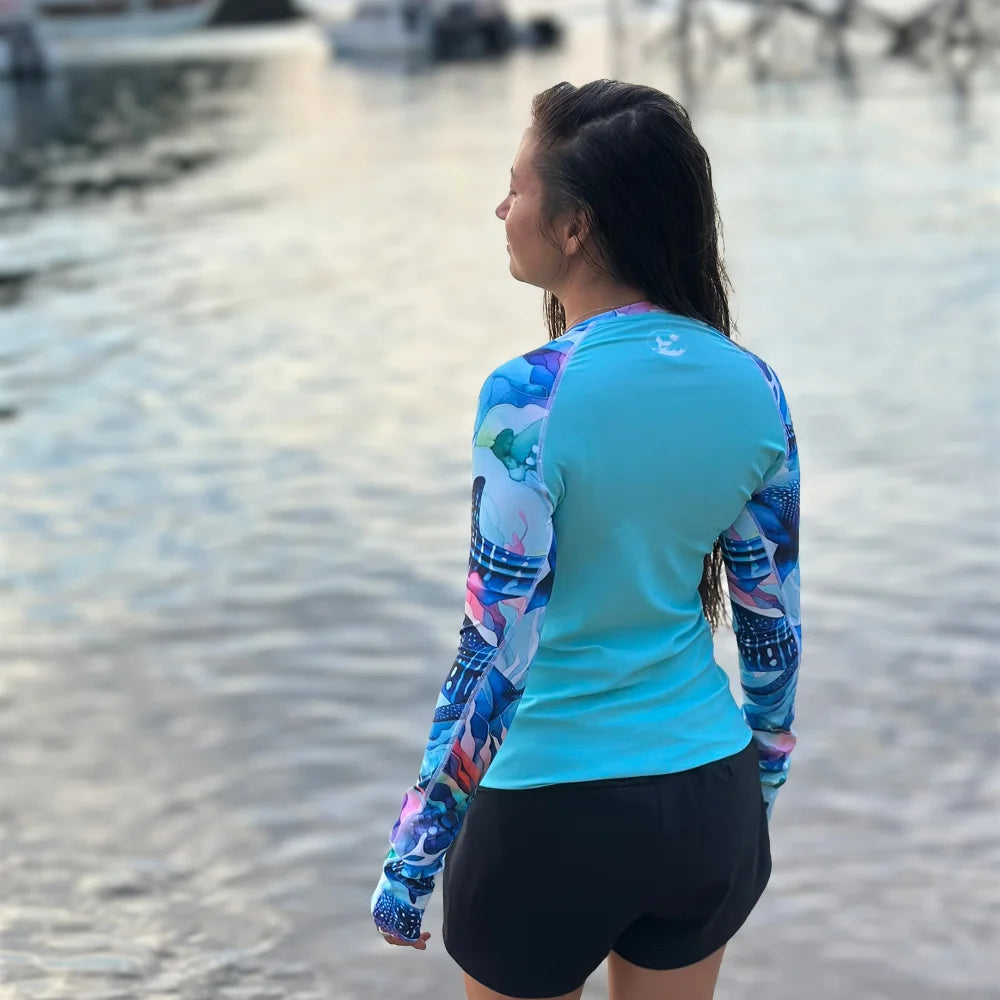
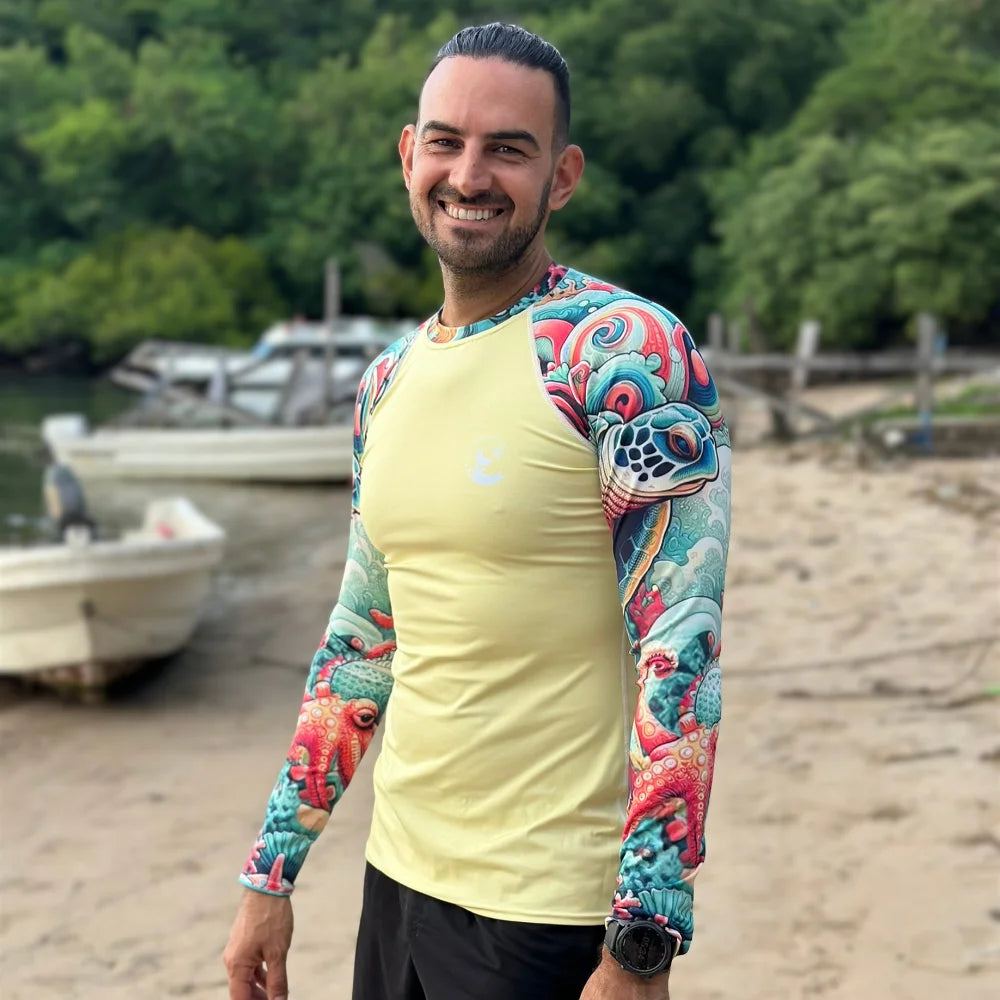
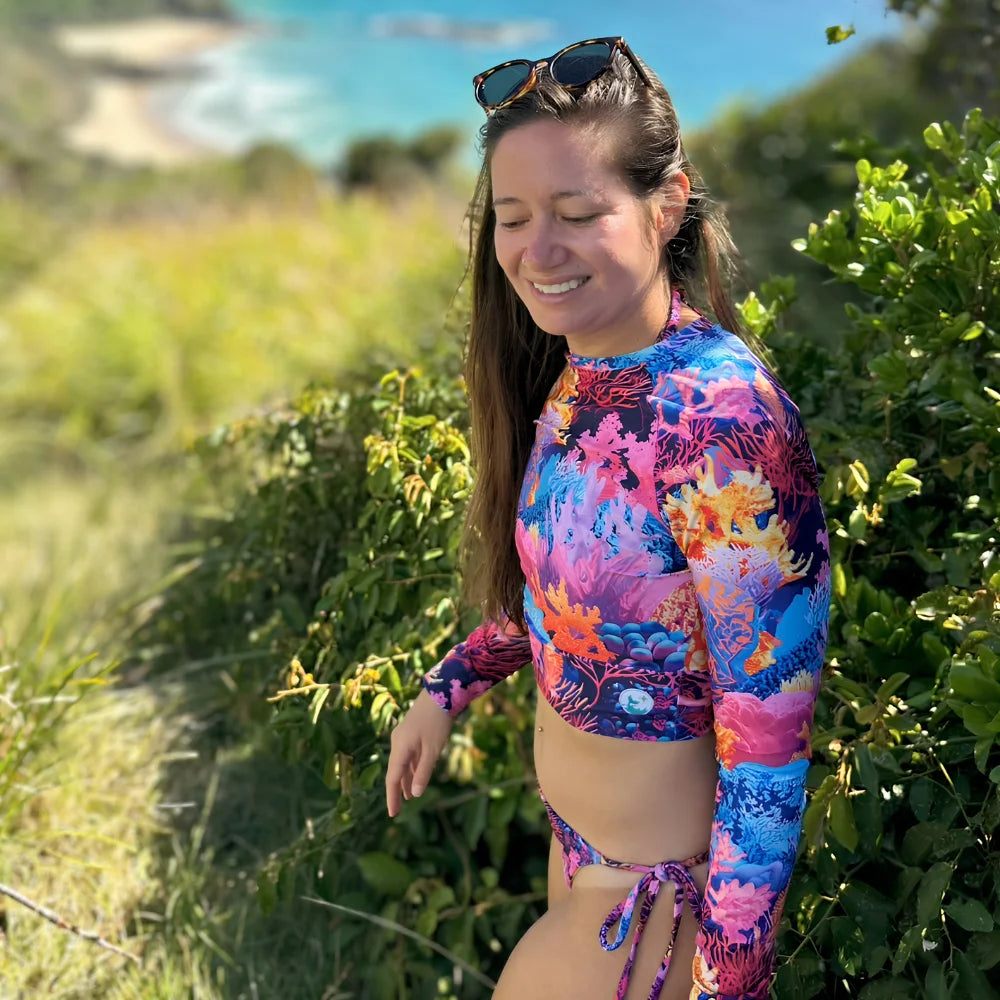
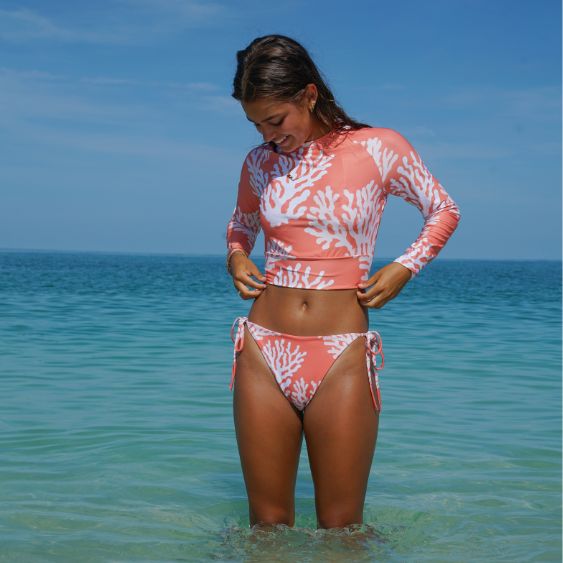
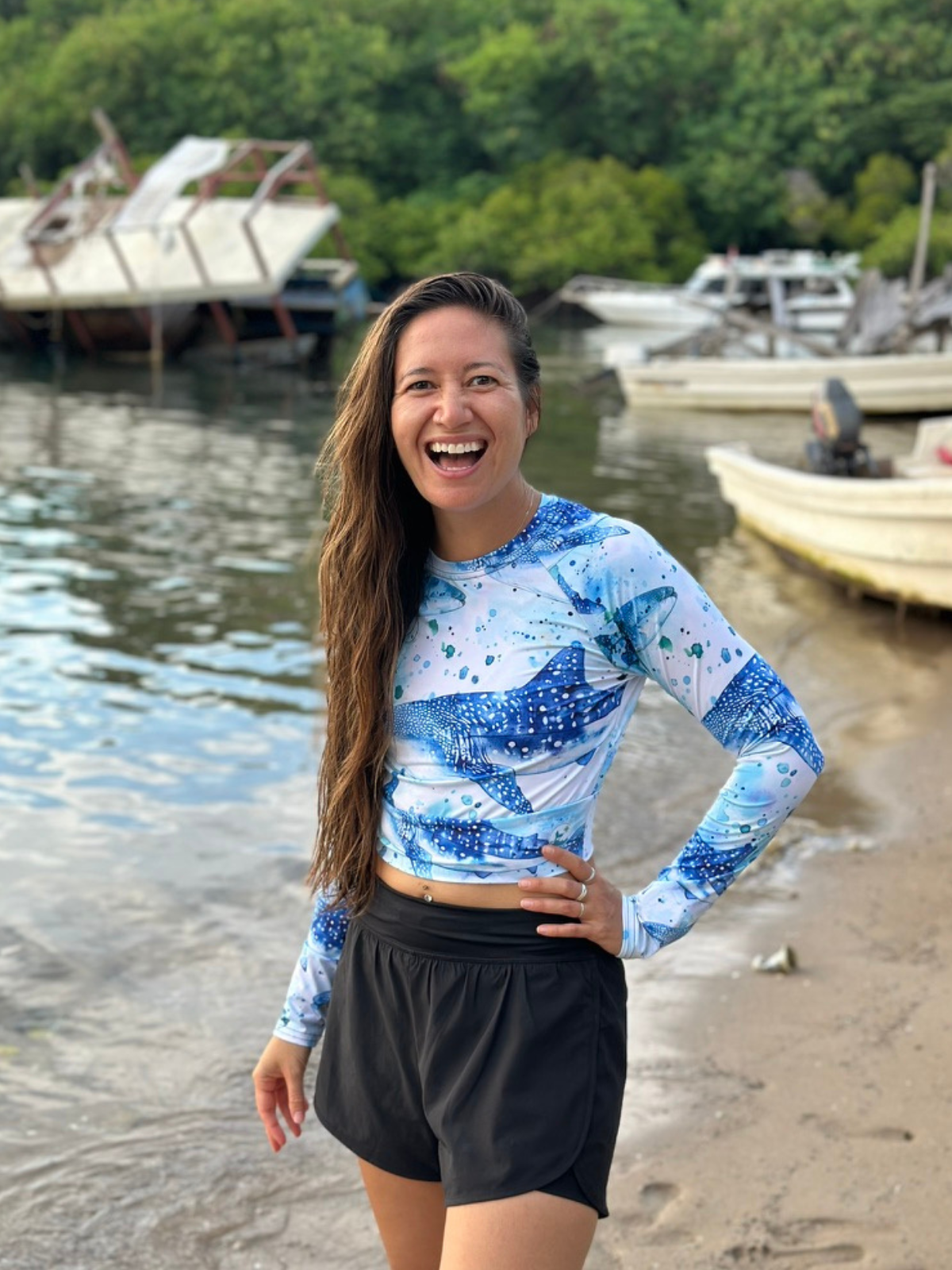
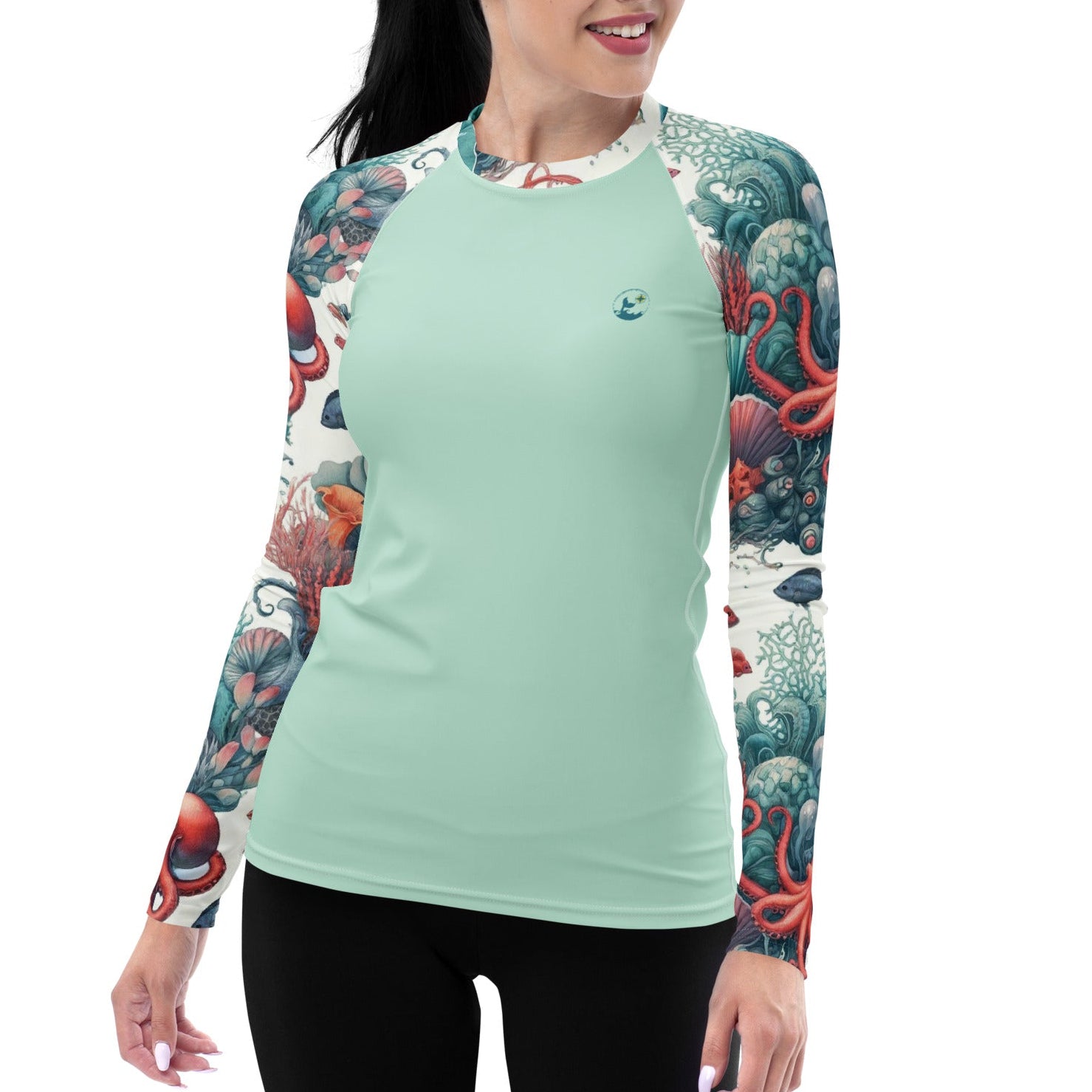
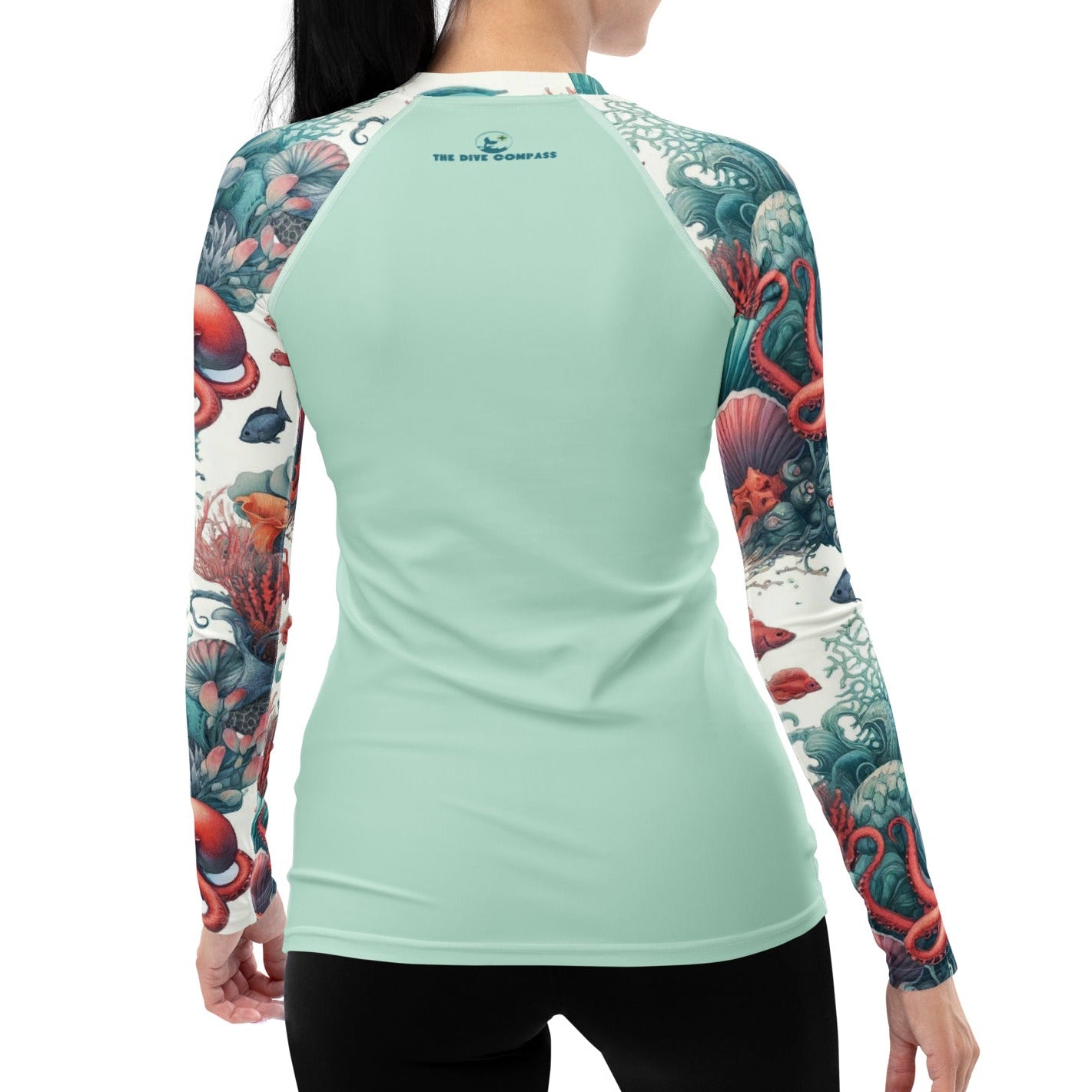
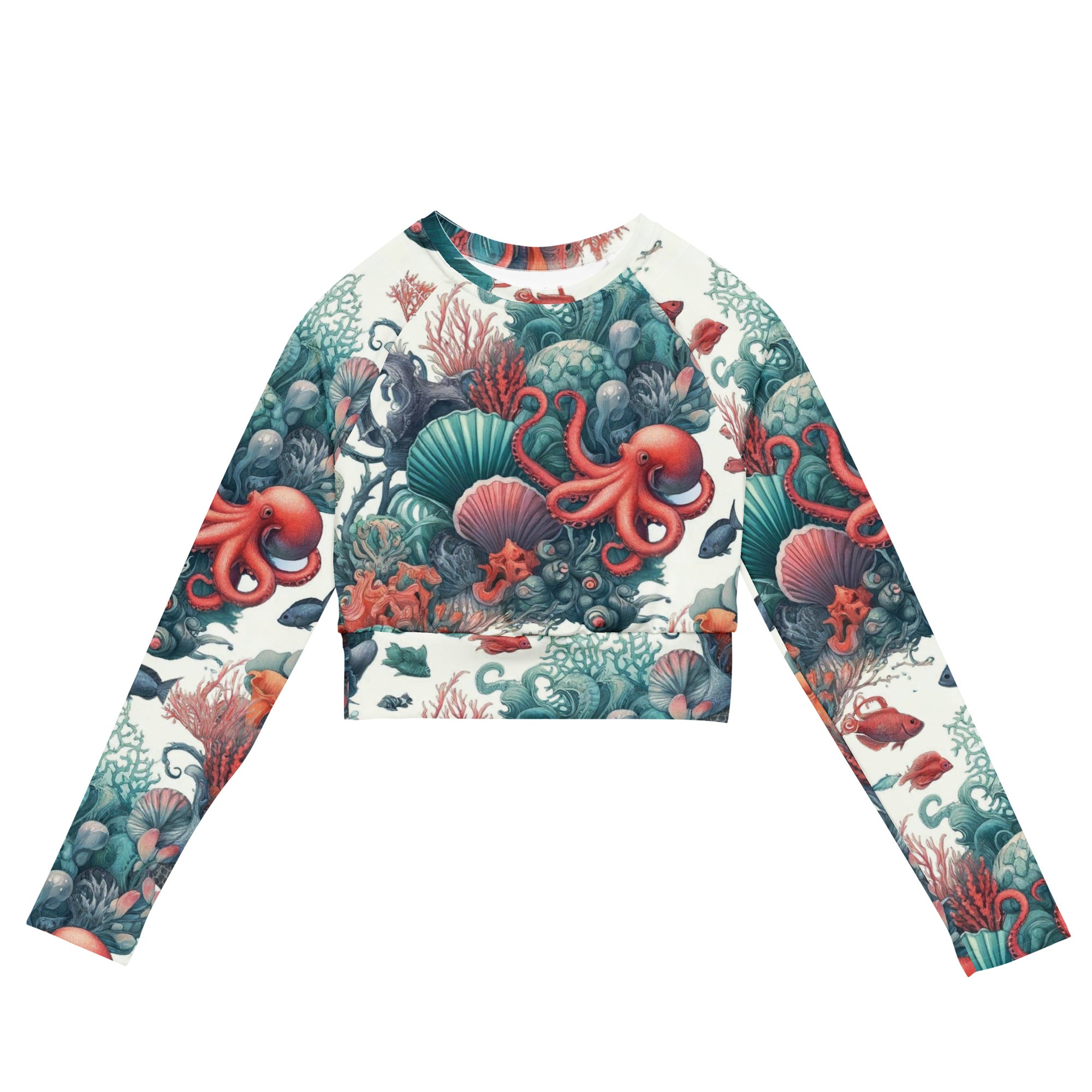
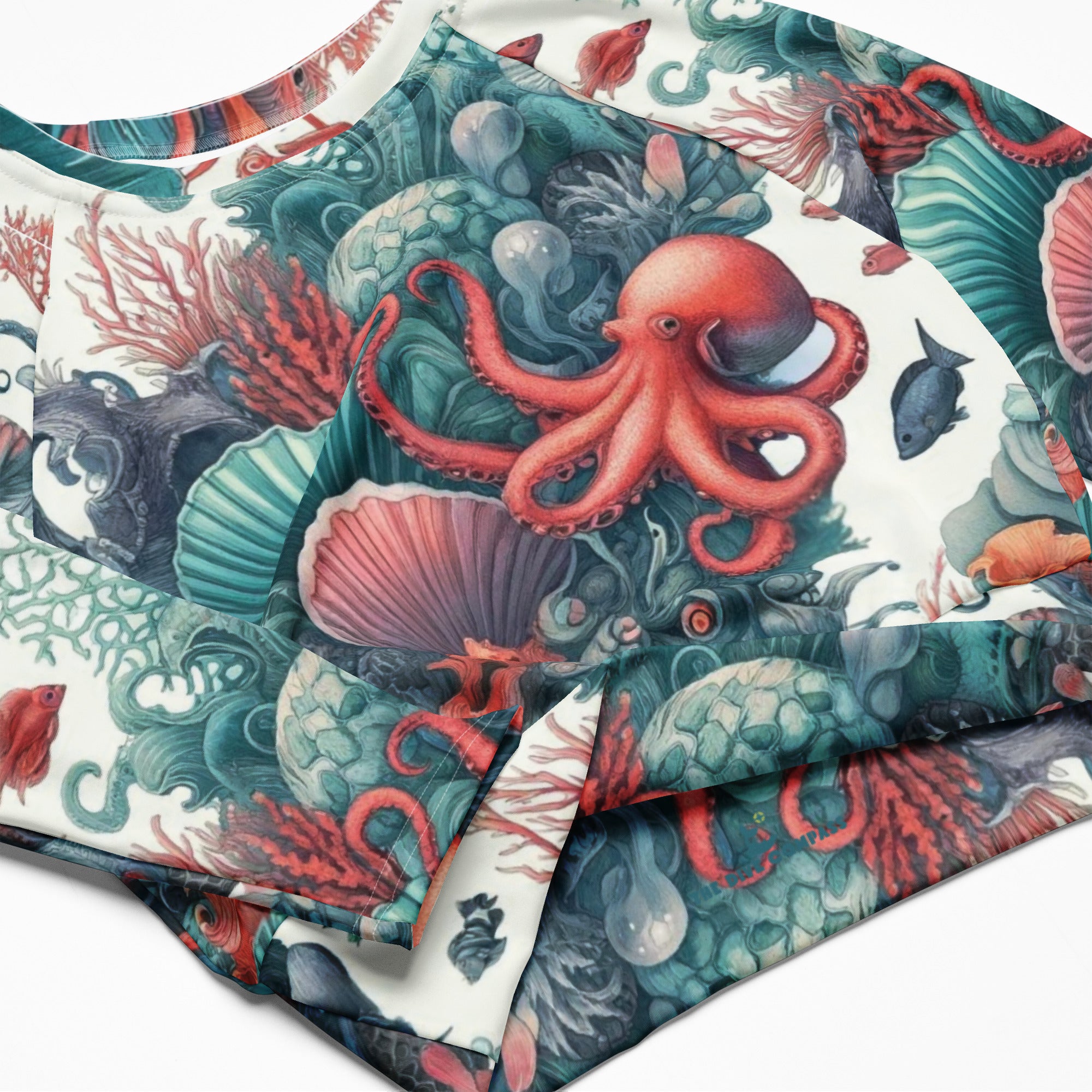
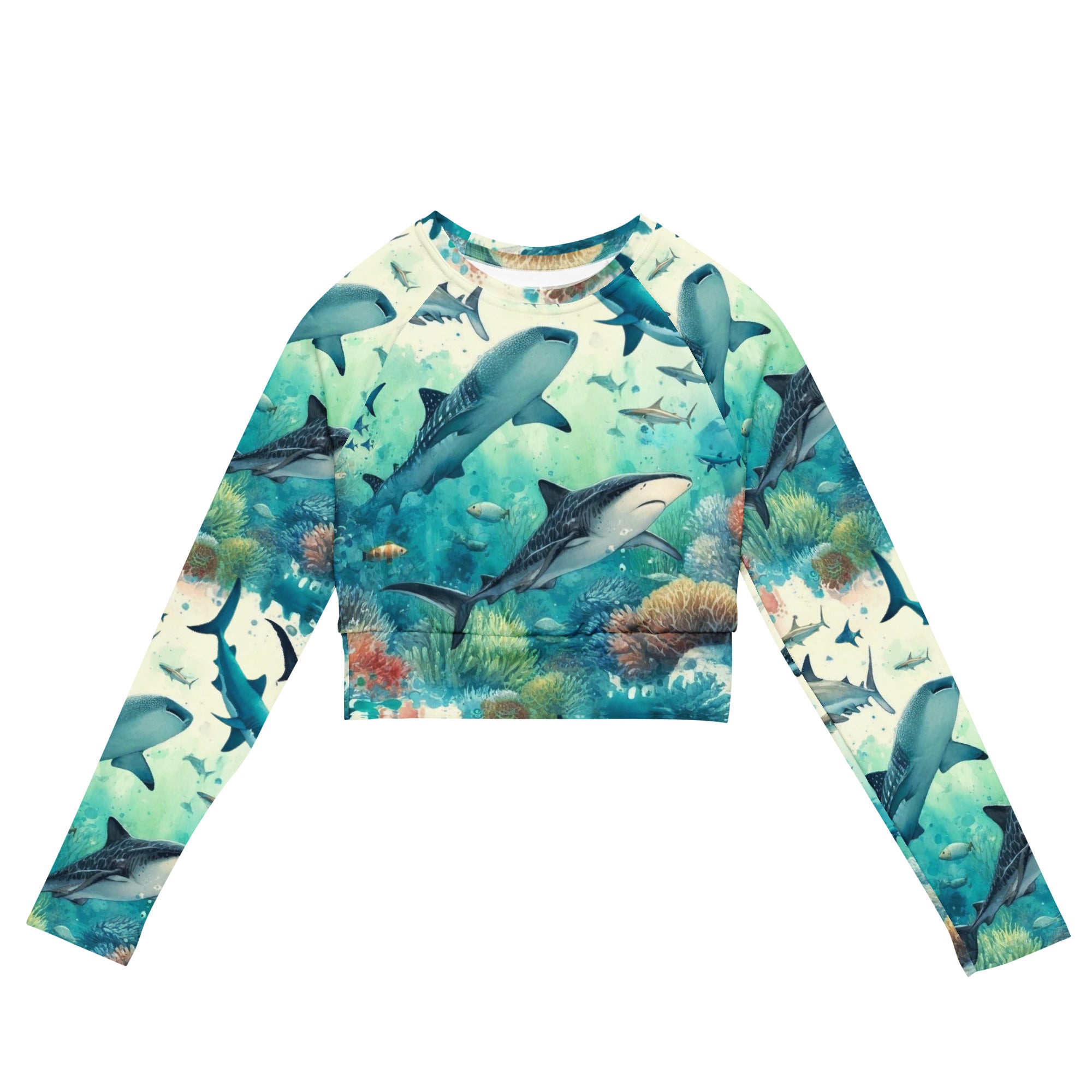
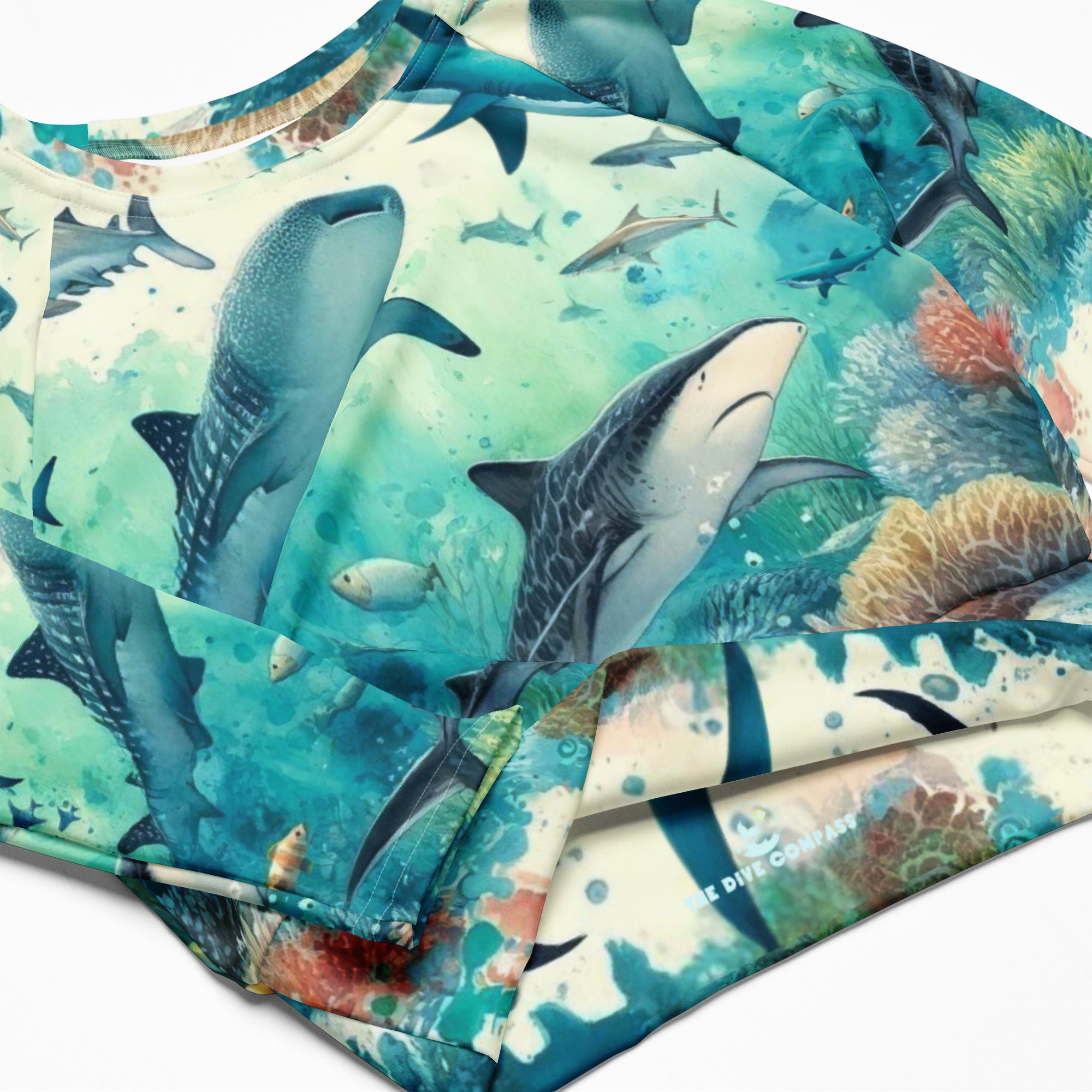
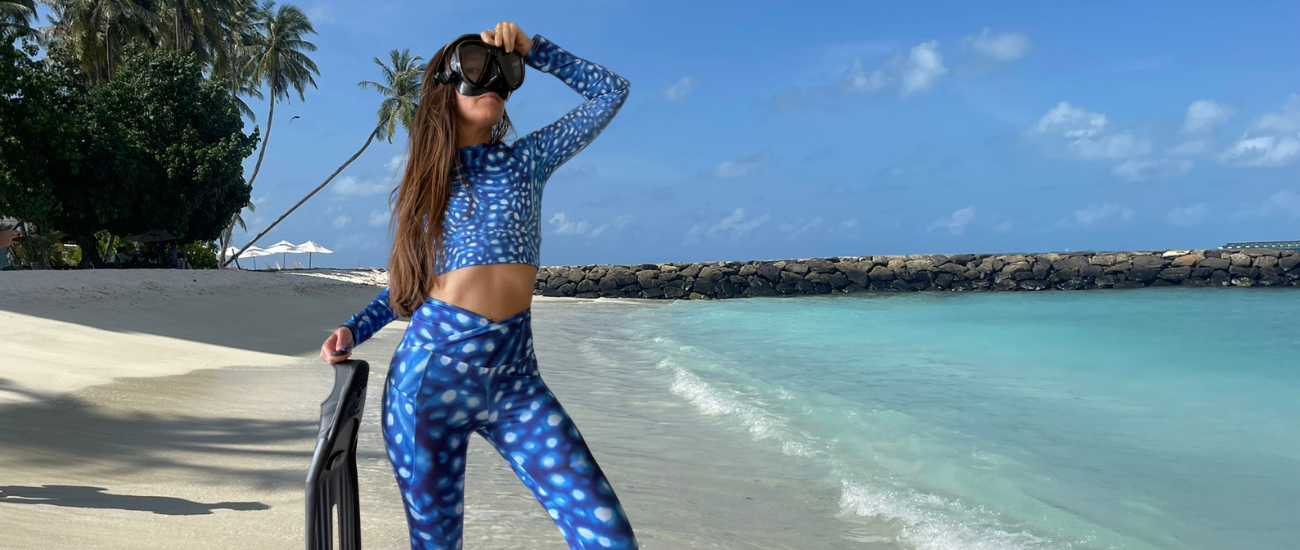
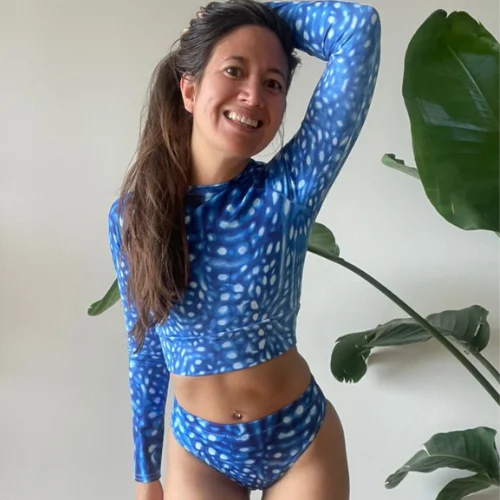
- A UPF 50+ rash guard. This is the single most useful thing you can pack. It protects you from the equatorial sun on the boat, gives you light thermal cover across three or four dives a day, doubles as your cover-up on local islands, and means you can skip slathering chemical sunscreen into a protected marine ecosystem. Our women's rash guards and men's rash guards are made for exactly this. The cropped rashie is a favorite for warm water.
- Dive leggings. Scuba leggings add sun and reef protection without the heat of a full suit, ideal for warm-water diving.
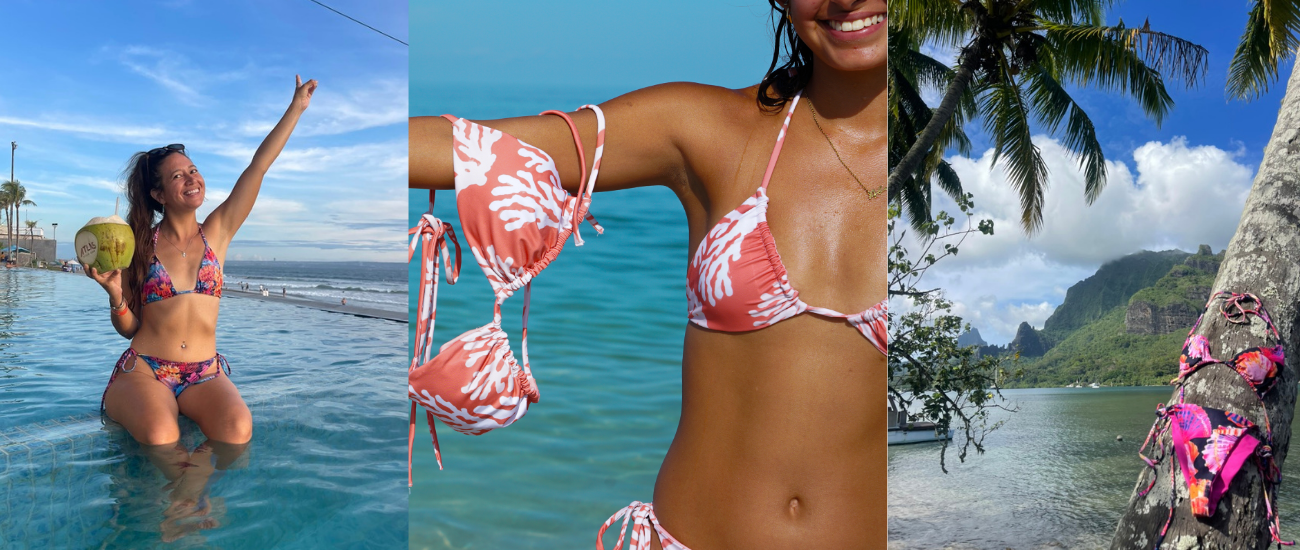
- A swimsuit that actually stays put under a wetsuit or on a current dive. That's the whole reason The Dive Compass exists.
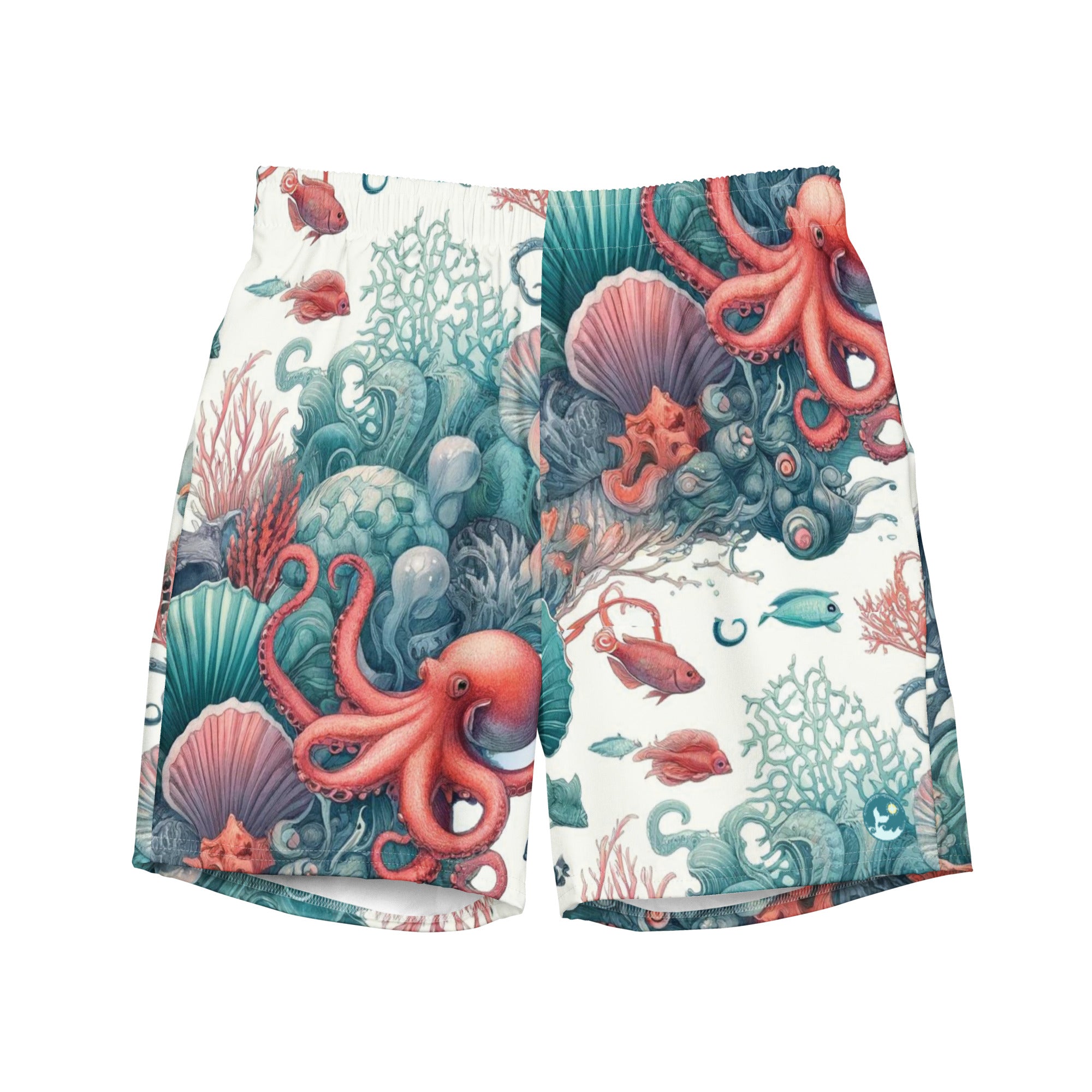
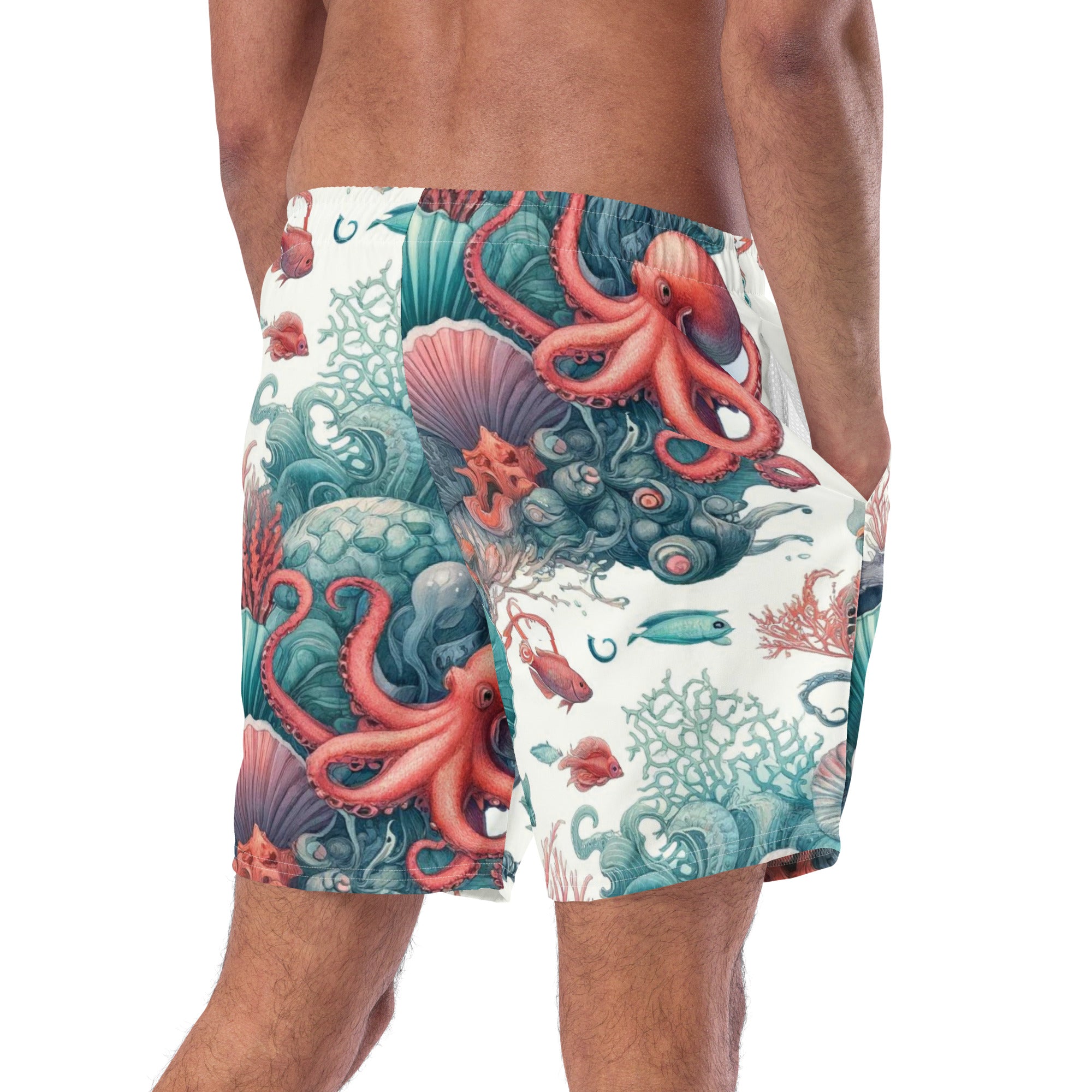
- Modest cover-ups for local islands. A pair of breezy swim shorts and something that covers your shoulders will keep you respectful and comfortable on inhabited islands.
- Reef-safe mineral sunscreen for any skin your rash guard doesn't cover.
- The boring essentials: your certification card and logbook, a reef-safe attitude, and a dry bag.
Not sure on sizing before you travel? Our size guide will sort you out before you're standing in a guesthouse on Fulidhoo realizing you packed wrong.
Want everything ocean-inspired and made for warm water in one place? Browse our Maldives collection.
Dive it responsibly
The Maldives is a coral nation. Its entire existence, the islands, the economy, the diving, depends on living reefs, and those reefs are under real pressure from warming water.
As divers, the small choices add up: keep your fins off the coral, don't chase or touch the animals, choose operators who do the same, and swap chemical sunscreen for a rash guard in the water. At The Dive Compass, every print is inspired by the marine life we dive with, our swimwear is made from recycled materials with zero overproduction, and every purchase plants a coral through our Save Our Seas Pledge with Livingseas. Because the best thing you can do for these reefs between dives is make every choice count.
The bottom line
The Maldives gave me a manta train, a plankton-lit night dive, and a week of laughing through my regulator with five of my favorite people. It did not give me a whale shark, and I'd still go back tomorrow. We're already planning to.
Go in the dry season for calm and clarity, or the wet season for the giants. Pick a local island if you're watching the budget, a liveaboard if you want to dive until you can't lift your tank. Respect the culture, pack a good rash guard, and let the ocean surprise you on its own schedule.
It will.
FAQ
Q: When is the best time to dive the Maldives? A: December to April (the northeast monsoon) gives you the calmest seas and best visibility — often 25–40 meters. May to November (the southwest monsoon) brings plankton, slightly lower visibility, and the best chances for manta and whale shark aggregations, with Hanifaru Bay peaking around June to October. Water stays 27–30°C year-round.
Q: Can you see whale sharks in the Maldives? A: Yes — South Ari Atoll holds the largest known year-round whale shark aggregation in the country. But sightings are never guaranteed, even in season (I dived during whale shark season and didn't see one). Choose operators who follow responsible-encounter guidelines.
Q: Is a liveaboard or a local island better for diving the Maldives? A: Local islands (like Fulidhoo) are far more affordable but tie you to one area with fewer dives. A liveaboard costs more but lets you dive three to four times a day, rack up 20+ dives in a week, and explore far more of the country. Choose based on budget vs. how much diving you want.
Q: What should I wear scuba diving in the Maldives? A: The water is warm (27–30°C), so a 3mm, a shorty, or a rash guard and dive leggings is usually plenty. A UPF 50+ rash guard is the most useful single item — sun protection, light thermal cover, a reef-safe alternative to sunscreen, and a cover-up for local islands.
Q: Do I need to cover up in the Maldives? A: On inhabited local islands, yes — swimwear is only allowed on designated bikini beaches, and you should cover shoulders and knees elsewhere. Liveaboards and resort islands are more relaxed. It's a Muslim country, so a little cultural awareness goes a long way.
Q: Can you drink alcohol in the Maldives? A: Alcohol is illegal in the Maldives and isn't sold anywhere on inhabited local islands — so there's no post-dive beer if you're staying local. Liveaboards and resort islands are the exception and can serve alcohol, so factor that into where you stay if it matters to you.
Q: Can you dive the Maldives on a budget? A: Yes. Despite its high-end, luxury-resort reputation, the Maldives is doable on a budget if you stay on local islands and dive with nearby centers rather than booking a resort or liveaboard. I did exactly that on my first trip in 2018 and still saw incredible diving.
Written by Andrea Galassi